

Choosing a Chemical Fertilizer supplier in 2026 involves more than comparing quoted prices. Global buyers must consider product consistency, production capacity, shipping options, and clear technical documentation. A low price can lose its appeal when a shipment arrives late or its nutrient analysis differs from expectations. Details matter.
This guide examines suppliers serving international agricultural markets and the practical factors buyers can use to assess them. These include fertilizer grades, quality-control practices, packaging choices, export experience, and responsiveness to questions. Buyers should request current product specifications and confirm that certificates match the intended shipment. Those checks help, though no document replaces careful supplier review.
Market conditions can shift, and availability may vary by region and season. A supplier with a strong reputation in one market may not offer the same service elsewhere. That point is easy to overlook. The profiles and selection criteria that follow are intended as a starting point, not a substitute for due diligence. Compare offers against crop needs, local requirements, delivery timelines, and total landed cost before making a commitment. Even experienced buyers may find gaps in public information, so asking precise questions remains worthwhile.
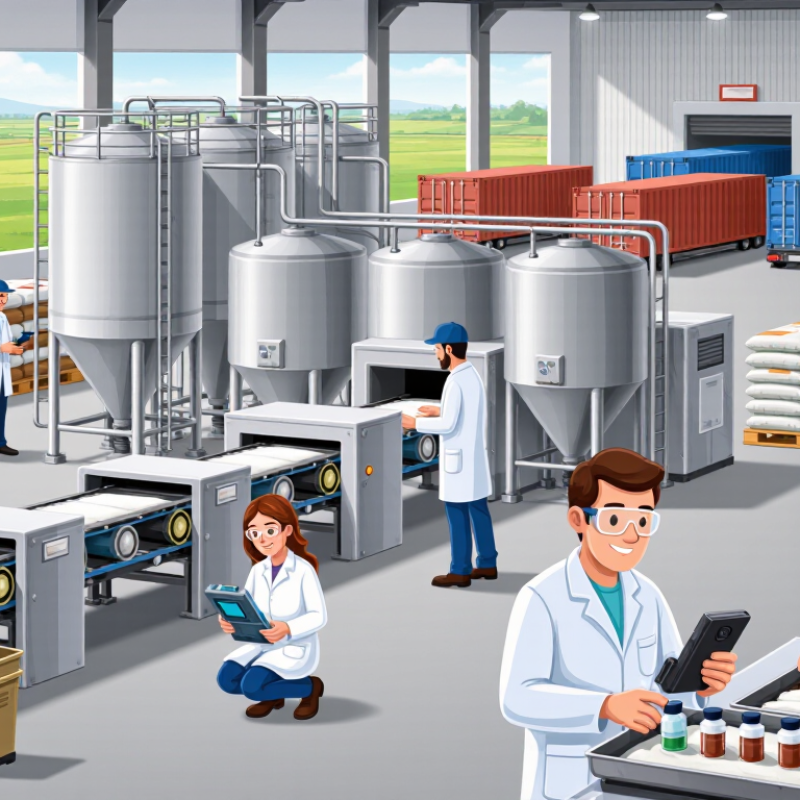
In 2026, chemical fertilizer suppliers offer global buyers more than bags of product. Many provide granular and water-soluble options, custom nutrient blends, and packaging suited to local storage conditions. A buyer comparing quotations should check nutrient analysis, solubility, batch consistency, and recommended application rates. Details matter. A clear product specification can prevent costly surprises after a shipment arrives.
Reliable suppliers also support purchasing with batch test reports, certificates of analysis, safety data sheets, and traceable lot numbers. Ask whether the documents match the exact product and production batch, not just a similar grade. Some suppliers arrange export packaging, freight coordination, and updates on expected delivery dates. For example, moisture-resistant liners may help protect fertilizer during a long sea journey. Still, a document alone does not prove every bag will arrive in perfect condition.
Technical support can help buyers compare nutrient needs with soil tests and crop plans. Good guidance should explain limits, not promise dramatic yield gains. Request a sample when practical, confirm minimum order quantities, and clarify how damaged goods or delays are handled. Even experienced suppliers can face port congestion or production changes. That possibility deserves a direct conversation before payment.

Choosing a chemical fertilizer supplier requires more than comparing quoted prices. Request current product specifications, safety data sheets, and batch-specific certificates of analysis. Check whether nutrient values, moisture limits, granule size, and packaging details match the purchase contract. For unfamiliar products, consider independent testing before shipment. A neat sample can hide variation across production batches. Ask how the supplier handles out-of-spec results, and get the answer in writing.
Reliability is visible in operational details. Ask for realistic production capacity, normal lead times, and recent on-time delivery records. Confirm how orders are packed, labeled, stored, and protected from moisture during transit. A supplier should identify the manufacturing site and explain how each batch can be traced. Test communication with a specific question: who will alert you if loading slips by three days? Fast replies help, but evidence matters more. Small delays happen.
Compliance depends on destination and product classification, so verify requirements with qualified local regulatory or customs advisers. Match labels and documents to the importing market, including language, hazard information, origin, and transport details where required. Do not rely on a generic certificate. Keep approval records, test results, and shipment documents together for each order. Supplier audits can help, though they cannot guarantee every shipment. Review your checklist after each delivery; buyers can overlook simple points, such as damaged seals or mismatched lot numbers.
Chemical fertilizer suppliers usually fall into several groups. Large integrated producers make nitrogen, phosphate, or potash products at scale. Their strength is dependable volume and established export logistics. Buyers should still check product specifications, port access, and delivery schedules; a large plant does not guarantee a smooth shipment.
Regional strengths vary. Producers near natural gas supplies often have advantages in nitrogen fertilizer, while areas with phosphate rock or potash deposits may support stronger local supply. Agricultural cooperatives and distributors can serve smaller farms with regional storage and practical application advice. Specialty blenders, meanwhile, can tailor nutrient ratios to local soils and crops. Local knowledge matters. But availability can change with harvest seasons, transport bottlenecks, and energy costs.
For a cross-border purchase, compare more than the quoted price. Request recent certificates of analysis, confirm nutrient content and packaging, and ask how damaged or delayed cargo is handled. Check whether a supplier can explain storage needs in plain terms, such as keeping bags dry and away from direct ground contact. A cautious buyer should verify each shipment, even from a familiar source. Paperwork can look reassuring; the product still needs inspection.
Major supplier types and their regional strengths, illustrated by 2023 output from leading producing countries.
China is a major producer across ammonia and phosphate rock; Canada leads potash production, while Morocco is a key phosphate-rock source. Values are approximate million metric tonnes. Potash is reported as K₂O equivalent; production measures differ by product, so compare within each product category. Source: U.S. Geological Survey, Mineral Commodity Summaries 2024.
2026 Best Chemical Fertilizer Suppliers for Global Buyers
Comparing Fertilizer Products, Pricing, and Logistics
A low price per tonne can be misleading. Compare nutrient content, solubility, granule size, and packaging before requesting quotations. A tonne of one formulation may not deliver the same usable nutrients as another. Ask suppliers for current product specifications and a batch analysis, then calculate cost per unit of nutrient. Small differences matter.
The World Bank’s April 2024 Commodity Markets Outlook projected fertilizer prices would average 22% lower in 2024 than in 2023. That broad forecast does not guarantee a lower delivered price: grades, shipment size, currency, and delivery terms all affect the final quote. Compare itemized offers, including inland transport, port handling, insurance, and any storage charges. The comparison is imperfect.
Logistics deserve equal scrutiny. UNCTAD’s Review of Maritime Transport 2024 reported that maritime trade grew 2.4% in 2023 and projected 2% growth for 2024. For buyers, shipping schedules can still shift. Confirm loading windows, available vessel space, bag or bulk options, and moisture protection. A delayed shipment can disrupt planting plans. Request realistic transit estimates, not just the earliest date, and check that documents match the product and destination requirements.
| Supplier Profile | Common Product Options | Typical Guaranteed Grade | Price Comparison | Typical Logistics | Buyer Checks |
|---|---|---|---|---|---|
| Nitrogen fertilizer producer or exporter | Urea; ammonium sulfate | Urea: 46% N; ammonium sulfate commonly: 21% N and about 24% S | Request a dated quotation. Compare the same grade, volume, currency, and Incoterm; nitrogen products are exposed to energy and freight costs. | Bulk vessel shipments for large lots; bagged or containerized cargo may be available. Confirm moisture protection and port handling. | Verify nitrogen analysis, biuret where relevant, particle size, certificate of analysis, origin documents, and shipment window. |
| Phosphate fertilizer producer or exporter | Diammonium phosphate (DAP); monoammonium phosphate (MAP) | DAP commonly: 18-46-0; MAP commonly: 11-52-0 (N-P2O5-K2O) | Compare delivered cost per nutrient unit as well as price per tonne. A firm 2026 price requires a current supplier quote and destination details. | Bulk and bagged shipments are common. Check port access, discharge rate, bag specifications, and inland transport availability. | Confirm water-soluble phosphate, nutrient tolerances, granule size, anti-caking treatment, and applicable import limits. |
| Potash fertilizer producer or exporter | Muriate of potash (MOP); sulfate of potash (SOP) | MOP commonly: 0-0-60; SOP commonly: 0-0-50 with sulfur content varying by specification | Request product-specific offers. Compare potassium as K2O, chloride suitability, origin, freight, and any applicable trade measures. | Bulk vessel and container options depend on origin, lot size, and destination. SOP may have fewer sourcing options than MOP. | Check chloride limits for chloride-sensitive crops, particle size, soluble potassium, origin, and certificates required by the importing country. |
| Blended or compound fertilizer manufacturer | NPK blends and compound fertilizers in crop-specific grades | Grade varies by formulation; specify the guaranteed N-P2O5-K2O analysis and secondary nutrients | Compare identical formulations and nutrient guarantees. Custom blends may require minimum order quantities and additional lead time. | Usually shipped in bags or bulk, subject to facility and destination. Confirm production lead time, packaging, and port or warehouse capacity. | Request a batch analysis, nutrient uniformity data, granule compatibility details, labeling compliance, and confirmation of the exact formulation. |
| Regional importer or agricultural distributor | Locally registered nitrogen, phosphate, potash, and NPK products | Depends on stocked product and local registration; check the product label and certificate of analysis | May quote a delivered or warehouse price. Compare taxes, handling, credit terms, and last-mile delivery against direct-import costs. | Local inventory can shorten delivery time and reduce buyer-managed shipping, but availability and coverage vary by market. | Verify registration, stock date, storage condition, traceability, delivery terms, and responsibility for damaged or off-spec goods. |
| Pricing and specification note: Nutrient grades above are common commercial specifications, not a guarantee for every product or supplier. No fixed 2026 prices are shown because fertilizer quotations change with product grade, origin, order volume, shipment date, destination, currency, freight, and Incoterms. Obtain a current written quotation and verify specifications, import requirements, and delivery terms before purchase. | |||||
Start with the target crop, soil conditions, and delivery route, not a sales brochure. Ask for product specifications, nutrient analysis, safety data, and recent batch documents. Compare these with local registration and labeling requirements before ordering. Check whether the supplier can maintain consistent quality across seasons. Request references from buyers with similar crops and port access. Small details matter.
Confirm packaging sizes, moisture protection, lead times, and what happens when a shipment is delayed. Ask how complaints are investigated and whether test results can be traced to a batch. Price matters, but a low quote can hide freight, storage, or quality costs. A sample trial may reveal handling issues that paperwork misses. Still, one trial cannot prove long-term reliability. A spreadsheet helps, though it never tells the whole story.
Tips: Keep a simple scorecard for quality documents, delivery performance, communication, and total landed cost. Verify details with independent testing when appropriate, and record unanswered questions before signing. Don’t rush the decision.

