

Best Carbon Fiber Sheets for Sale in 2026

In 2026, choosing carbon fiber sheets takes more than comparing prices and glossy product photos. A sheet that looks flawless may still be wrong for a bracket, panel, or repair. Thickness, fiber orientation, resin system, and finish all affect how it performs. Small details matter.

Materials scientist Deborah D. Chung has written extensively about carbon-fiber composites. This guide uses a practical editorial paraphrase of the principles behind that work, not a verbatim quotation: “Choose for the load and application, not the shine.” That distinction matters when a woven surface catches the light but the product listing omits its layup or thickness tolerance.

The sections ahead examine what buyers should check before ordering: dimensions, weave, laminate construction, surface quality, and supplier specifications. We’ll also consider where a decorative sheet differs from one intended for structural use. A caliper can confirm thickness; it cannot reveal every detail inside the laminate. Ask for documentation when the listing is vague.

There is no universal best sheet. A thin panel may suit a lightweight cover, while a thicker laminate may fit a more demanding application. The right choice depends on the job. And sometimes product pages leave important questions unanswered. That is worth noticing, not glossing over. This 2026 guide aims to compare options carefully, explain trade-offs in plain English, and help readers make a more informed purchase.
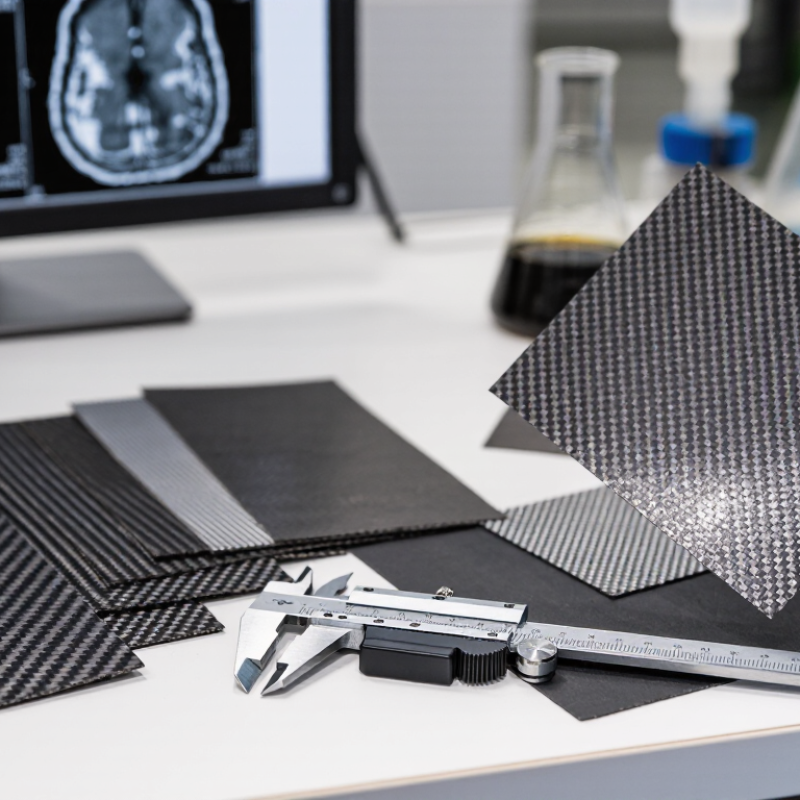
Best Carbon Fiber Sheets for Sale in 2026

What Carbon Fiber Sheets Are and How They Are Made

A carbon fiber sheet is usually a laminated panel, not a single, solid layer of fiber. Thin carbon-fiber tows are woven or laid in aligned plies, then bonded with resin. Most industrial fiber starts as polyacrylonitrile, or PAN. The precursor is heated in air to stabilize it, then carbonized in an oxygen-free furnace. Temperatures commonly exceed 1,000°C. The resulting fibers are impregnated with resin, stacked in a chosen direction, and cured under heat and pressure. Small details matter: a glossy face can hide uneven plies or resin-rich patches.

The naming is messy, and that matters. Some sellers call a cured laminate a “sheet”; others may mean dry fabric. Grand View Research’s Carbon Fiber Market report estimated the global market at about $5.48 billion in 2023, with projected growth through 2030. That figure describes the wider fiber market, not sheet quality. Treat forecasts as directional, not proof of performance. For a real comparison, check thickness, fiber orientation, resin type, and test data. ASTM D3039, for example, is a recognized method for measuring tensile properties of polymer-matrix composites. A neat surface is not enough. Ask how the panel was made and tested; even then, published data may not match your exact cut or application.

Common Sheet Types, Weaves, Thicknesses, and Finishes in 2026

Carbon fiber sheets available in 2026 vary by construction, weave, thickness, and surface finish. Standard laminated plates suit brackets, panels, and lightweight covers. Decorative face sheets are often chosen for visible surfaces, while unidirectional laminates place most fibers along one axis. That direction matters: strength depends on how the sheet is loaded. Check the product’s layup details, not just its carbon-fiber label.

Plain weave has a tidy checkerboard appearance and resists fraying during handling. Twill weave forms diagonal lines and drapes more easily around gentle curves. Both are common. For flat parts, either may work; for loads in one direction, a specified unidirectional layup can be a better fit. Still, weave alone does not tell you how strong a finished sheet will be.

Thicknesses often range from thin decorative laminates to rigid plates several millimeters thick. Thin sheets are easier to cut, but can flex or crack if poorly supported. Thicker plates feel more rigid and add weight. Gloss finishes highlight the weave but show scratches and fingerprints; matte finishes hide them better. Peel-ply surfaces provide texture for bonding, though they may look rough. I would test a small sample first. Finish descriptions can be vague, and that is easy to overlook.

Best Carbon Fiber Sheets for Sale in 2026

Common sheet thicknesses and estimated areal mass

The bars show representative nominal thickness options. Estimated areal mass is calculated using a representative composite density of 1.55 g/cm³; actual weight varies with fiber-to-resin ratio, weave, and manufacturing method. Check the product specifications for exact dimensions and weight.

How to Compare Strength, Weight, and Material Quality

When comparing carbon fiber sheets, assess the finished laminate, not just the fiber’s headline strength. The ASM Handbook, Volume 21: Composites, gives typical carbon-fiber/epoxy composite densities around 1.5–1.6 g/cm³, compared with roughly 2.7 for aluminum and 7.8 for steel. A one-square-meter sheet, one millimeter thick, would therefore weigh about 1.5–1.6 kilograms. Check the seller’s stated thickness and density; resin content and voids can change the real weight. Small differences matter.

Strength depends on fiber direction, weave, and how the layers are stacked. ASTM D3039 provides a standard method for measuring tensile properties of polymer-matrix composite coupons, but a test value is useful only when the layup and test direction match your intended use. Ask for a data sheet showing tensile strength, tensile modulus, thickness tolerance, and test method. A high figure in one direction may hide weaker cross-direction performance. Look closely.

Surface gloss is not a strength rating. Inspect cut edges for uneven layers, resin-rich patches, or visible gaps, and request test data for the actual panel construction. I would compare weight per area and documented properties before paying extra for a polished finish. That judgment can be imperfect: published coupon results do not guarantee identical performance in a finished part.

Choosing the Right Carbon Fiber Sheet for Your Application

Best Carbon Fiber Sheets for Sale in 2026

Choosing a sheet starts with the load, not the finish. A glossy twill weave looks polished, but appearance does not tell you how stiff the panel will be. Check the fiber direction, layer count, resin system, and thickness. For a flat bracket under bending, a balanced laminate with fibers running in multiple directions may behave more predictably than a thin, single-direction panel. Small detail, big difference.

The U.S. Department of Energy’s 2013 Vehicle Technologies Office materials brief reports potential weight reductions of up to 60% for selected carbon-fiber composite components compared with steel. That figure is not a guarantee for every finished part. A sheet’s real advantage depends on its design, joints, and operating conditions. For a lightweight camera plate, weight may matter most; for a machine guard, impact resistance and mounting points deserve more attention. Measure twice.

Ask suppliers for laminate orientation, thickness tolerance, resin temperature limits, and test data. Also consider how you will cut the sheet. A fine-tooth blade, supported workpiece, and dust extraction can help produce cleaner edges. For outdoor use, check UV protection and moisture resistance rather than assuming the surface coating is enough. I would not choose by price alone; I have seen a low-cost sheet become expensive after rework. Depends on the job.

Where to Buy Carbon Fiber Sheets and What to Check Before Ordering

For carbon fiber sheets, buy from specialist composite-material suppliers or industrial distributors that publish a technical data sheet. General marketplaces may offer more choices, but listings often omit resin type or thickness tolerance. Check whether the seller can provide a sample and answer questions about storage and handling. The market is growing, but that does not guarantee consistent sheet quality. Grand View Research estimated the global carbon fiber market at USD 5.48 billion in 2023 and projected an 11.9% compound annual growth rate from 2024 to 2030. This market-level estimate is useful context, not proof that a particular sheet meets your needs.

Before ordering, confirm the sheet’s dimensions, nominal thickness, weave, fiber orientation, resin system, surface finish, and stated tolerances. Ask for test methods and batch traceability, especially when parts must fit closely. Inspect a sample under angled light. Look for waviness, uneven gloss, chipped edges, and small voids. Small details matter. A decorative panel and a load-bearing part need different specifications; do not rely on appearance alone.

Request a written quote that includes packaging, cutting, lead time, and the cost of rejected or damaged material. Check that the sheet will arrive flat and protected from impact. Compare the data sheet with your actual operating conditions, including heat and moisture exposure. One sample can still mislead if production varies between batches. I would check batch documentation before committing to a large order, even when the sample looks excellent.

Best Carbon Fiber Sheets for Sale in 2026 — Where to Buy and What to Check Before Ordering
Buying Option What You Can Typically Buy Best Suited For What to Check Before Ordering Practical Buying Note
Composite-material distributor Cured flat panels in common rectangular sizes, thicknesses, and surface finishes. Projects that need a ready-to-use sheet with published specifications. Panel dimensions, thickness and tolerance, laminate layup, resin type if specified, surface finish, and whether the panel is flat. Ask for a technical data sheet. A visible weave describes the surface fabric, not necessarily the full internal layup.
Specialist online composites supplier Standard panels, cut-to-size pieces, and sometimes different weave styles or thicknesses. Small projects or buyers comparing a range of sheet formats remotely. Actual finished dimensions, cut-edge condition, available tolerances, stock status, and packaging for shipment. Confirm whether listed dimensions are nominal or guaranteed and whether cutting or protective-film removal is included.
Industrial plastics and composites supplier Flat composite panels and larger-format stock intended for fabrication or industrial use. Fabrication jobs that need defined dimensions, repeat orders, or technical documentation. Material specification, thickness tolerance, panel size, edge quality, and any applicable test or compliance documentation. Request a written quotation that identifies the exact panel construction and tolerances, not just the material name.
Custom composite fabricator Panels made or cut to a specified size, thickness, fiber orientation, or laminate schedule. Parts with non-standard dimensions, specified load directions, or project-specific requirements. Fiber orientations, number and order of plies, resin system, finished thickness, machining limits, and inspection criteria. Provide a drawing and intended use. A custom quote should state which requirements are included and which are not.
Unidirectional (UD) laminate sheet Cured sheet with most reinforcing fibers aligned in one direction, sometimes combined with other orientations. Applications where the main load direction is known and the laminate is designed accordingly. Fiber direction, full layup, panel orientation markings, and whether the published properties apply to the finished laminate. UD material is direction-dependent; do not assume it has equal strength or stiffness in every direction.
Woven or multi-directional laminate sheet Cured panels made with woven fabric or multiple fiber orientations. General-purpose fabrication where handling, appearance, or more than one load direction matters. Weave type, ply orientations, balance of the layup, thickness, and whether the panel construction is documented. A balanced or multi-directional appearance alone does not confirm a particular strength or stiffness; check the layup details.
Marketplace or general online listing Listings may include decorative panels, structural laminates, and sheets with limited specification details. Non-critical projects when the seller can verify the material and dimensions. Whether the item is carbon-fiber composite rather than a carbon-patterned surface, plus core material, thickness, dimensions, and return terms. Do not rely on photographs alone. Ask for written confirmation of construction and specifications before purchase.
Any seller: shipping and order review Applies to panels ordered from distributors, online suppliers, or fabricators. Every order, especially large, thin, or custom-cut sheets. Protective packaging, shipping method, delivery condition process, cut-edge protection, lead time, and replacement or return policy. Carbon-fiber composite panels can be damaged by impact or poor handling. Inspect the package and panel promptly on arrival.
You've just added this product to the cart:

0
    0
    Your Cart
    Your cart is empty