Best Pe Irrigation Pipe for Global Agriculture Needs?
The increasing global demand for food highlights the vital role of efficient irrigation systems. With the world population projected to reach nearly 10 billion by 2050, agricultural productivity needs to rise by 70% to ensure food security. In this context, the selection of suitable irrigation materials becomes crucial.
PE irrigation pipes have emerged as a leading choice for farmers worldwide. According to a recent industry report, the global market for PE irrigation pipes is expected to grow substantially, driven by advancements in agricultural technologies and increasing awareness about water conservation. These pipes are known for their durability and resistance to various environmental factors, providing a reliable solution for diverse agricultural needs.
However, challenges remain. The correct installation and maintenance of PE irrigation pipes are critical for maximizing their efficiency. Reports indicate that improper practices can lead to significant water loss, undermining the benefits of this innovative technology. As the agriculture sector evolves, careful consideration of such factors will remain essential for achieving sustainable farming practices.
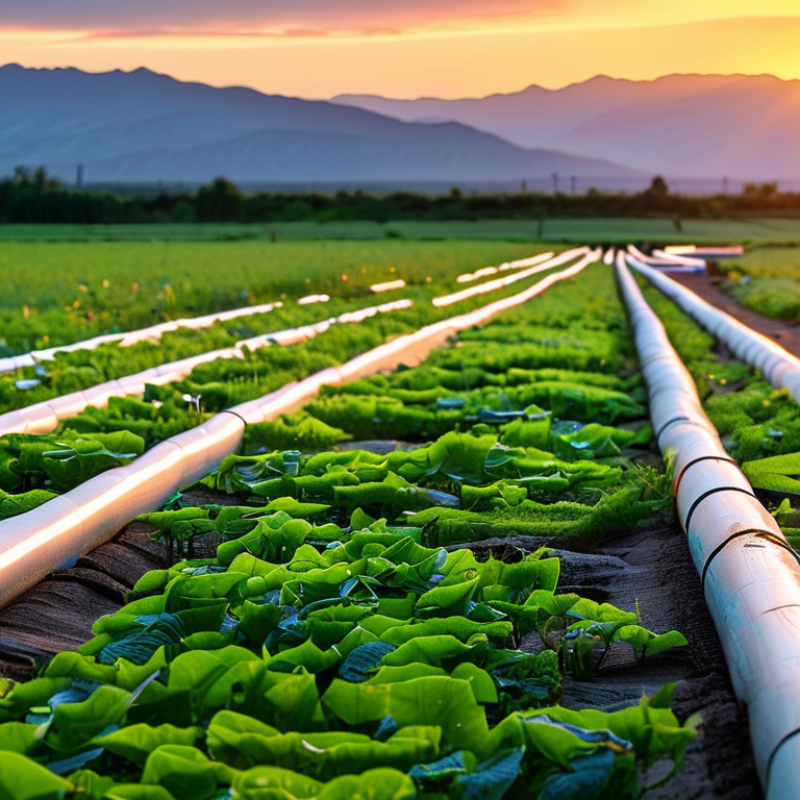
Overview of PE Irrigation Pipes and Their Importance in Agriculture
PE irrigation pipes play a crucial role in modern agriculture. They are lightweight, flexible, and resistant to corrosion. This makes them an ideal choice for various irrigation systems. Farmers rely on these pipes to deliver water efficiently to their crops. When used correctly, they can significantly improve yield.
Many regions face water scarcity. Here, PE pipes can offer a sustainable solution. Their durability reduces water loss through leaks. Moreover, they can withstand varying pressure levels, making them reliable under different conditions. However, improper installation can lead to issues. Farmers must ensure correct placement and maintenance to reap the benefits fully.
The environmental impact of irrigation methods is also a concern. While PE pipes are beneficial, they should not be a one-size-fits-all solution. Different crops and terrains require tailored approaches. Regular assessments of irrigation systems are necessary. This can help identify leaks or inefficiencies early on. A balanced approach is vital for maximizing agricultural productivity.
Types of PE Irrigation Pipes Suitable for Global Farming Practices
PE irrigation pipes are vital for modern agriculture. Their flexibility and durability cater to various farming practices around the world. Farmers have multiple options, each suited to different terrains and crop requirements. These include drip irrigation systems, which provide targeted watering, and sprinkler lines for broader coverage. Choosing the right type depends on specific needs.
Farmers must consider soil type, crop selection, and water source. Drip lines can save water and reduce weed growth effectively. However, improper installation may lead to uneven moisture distribution. Traditional pipe systems can be more robust but may not be as efficient.
One challenge is maintenance; debris can clog drip systems. Regular monitoring helps avoid water wastage. A thorough assessment of the irrigation system can enhance efficiency. Be mindful of local climates; they can significantly impact pipe longevity and performance. Evaluating these factors will improve agricultural productivity while conserving resources.
Best PE Irrigation Pipe for Global Agriculture Needs?
| Type of PE Pipe | Typical Applications | Diameter Range (mm) | Pressure Rating (bar) | Lifespan (Years) |
| Drip Irrigation Pipe | Fruits, Vegetables | 16 - 20 | 0.6 - 1.2 | 10 - 15 |
| Mainline Pipe | Large Scale Farms | 40 - 200 | 4 - 12 | 20 - 30 |
| Subsurface Pipe | Row Crops, Turf | 12 - 25 | 1.0 - 2.5 | 15 - 20 |
| Micro Irrigation Pipe | Greenhouses, Nurseries | 4 - 12 | 2.0 - 4.0 | 5 - 10 |
| Flush-Out Pipe | System Maintenance | 16 - 63 | 1.0 - 8.0 | 10 - 15 |
Factors Influencing the Selection of PE Irrigation Pipes
Selecting the best polyethylene (PE) irrigation pipes is essential for global agriculture. Several factors influence this decision. One critical aspect is the soil type. Different soils require varied irrigation strategies, thus impacting the choice of pipe. According to a report from the Food and Agriculture Organization (FAO), approximately 70% of freshwater resources are used for agriculture. Thus, choosing the right irrigation system is crucial for efficient water use.
Another significant factor is the hydraulic performance of PE pipes. Studies indicate that smooth pipe interiors reduce friction losses, increasing water delivery efficiency. Proper pipe sizing can enhance the overall system performance, according to research from the Irrigation Association, which notes that poorly sized systems can lead to a 20% reduction in efficiency. Furthermore, operating pressure impacts pipe selection. High-pressure environments may require thicker walls, increasing material costs.
Durability and resistance to environmental factors are equally important. PE pipes must withstand varying temperatures and potential exposure to chemicals. A 2021 market analysis highlighted that 15% of irrigation failures are due to pipe material degradation over time. This raises questions about long-term reliability. Users should consider these factors carefully, balancing performance and cost-effectiveness for sustainable agricultural practices.
Advantages and Disadvantages of Using PE Irrigation in Agriculture
Polyethylene (PE) irrigation pipes are becoming popular in global agriculture. They provide various benefits, but they also have limitations. Understanding these advantages and disadvantages helps farmers make informed choices.
One key advantage of PE irrigation is its durability. These pipes resist corrosion and can handle extreme weather. Farmers appreciate this longevity in harsh farming environments. PE pipes are also lightweight, making them easier to transport and install. Additionally, they require less maintenance compared to traditional materials. However, it's essential to consider potential drawbacks. PE pipes can become brittle over time, especially with prolonged exposure to sunlight. This brittleness may lead to cracks, causing water leaks. Farmers must be aware of this issue and consider protective measures.
Another consideration is the environmental impact. While PE is recyclable, not all farmers have access to recycling facilities. This leads to accumulation in landfills, raising concerns about sustainability. Furthermore, improper installation can result in inefficiencies. Water may not deliver evenly, affecting crop yields. Thus, while PE irrigation systems offer numerous benefits, growers should evaluate the long-term implications and make adjustments as needed. Balancing these factors is crucial for sustainable agricultural practices.
Emerging Trends and Innovations in PE Irrigation Technology
Emerging trends in polyethylene (PE) irrigation technology are vital for modern agriculture. Efficient water management is crucial as global water scarcity increases. According to a recent report by the Food and Agriculture Organization, approximately 70% of freshwater resources are used in agriculture. This highlights the urgent need for innovative irrigation solutions.
Recent innovations in PE irrigation systems offer promising alternatives. For instance, drip irrigation, which uses PE pipes, delivers water directly to plant roots. This method reduces waste and conserves water by up to 60%. The shift towards these technologies has been driven by environmental concerns and the need for better crop yields. Studies indicate that using advanced PE piping can improve crop output by at least 15%. However, the challenge remains in ensuring that these systems are accessible to smallholder farmers.
Data also shows that the global market for PE irrigation pipes is expected to grow significantly. In fact, it is projected to reach $2.1 billion by 2026. However, reliance on imported materials raises questions about sustainability and local production capacity. The focus on bio-based PE solutions is slowly gaining traction, yet more research is needed to assess their viability. Addressing these issues will be crucial in meeting the diverse needs of global agriculture.