
10 Best Wine Box Suppliers for Global Buyers

Choosing a wine box supplier is not just a packaging decision. It affects how bottles travel, how a brand feels in a customer’s hands, and how reliably orders arrive. A sturdy box should protect glass through ordinary handling. Its inserts should hold each bottle firmly, without awkward gaps or excessive movement. Small details matter.

Wine-packaging consultant Ethan Cole puts the sourcing challenge this way: “A box earns trust before the bottle is opened.” That is a useful test, though not the only one. Buyers should also compare material options, print consistency, customization limits, sample quality, production capacity, and communication across time zones. A glossy catalog can look convincing. A physical sample may tell a different story.

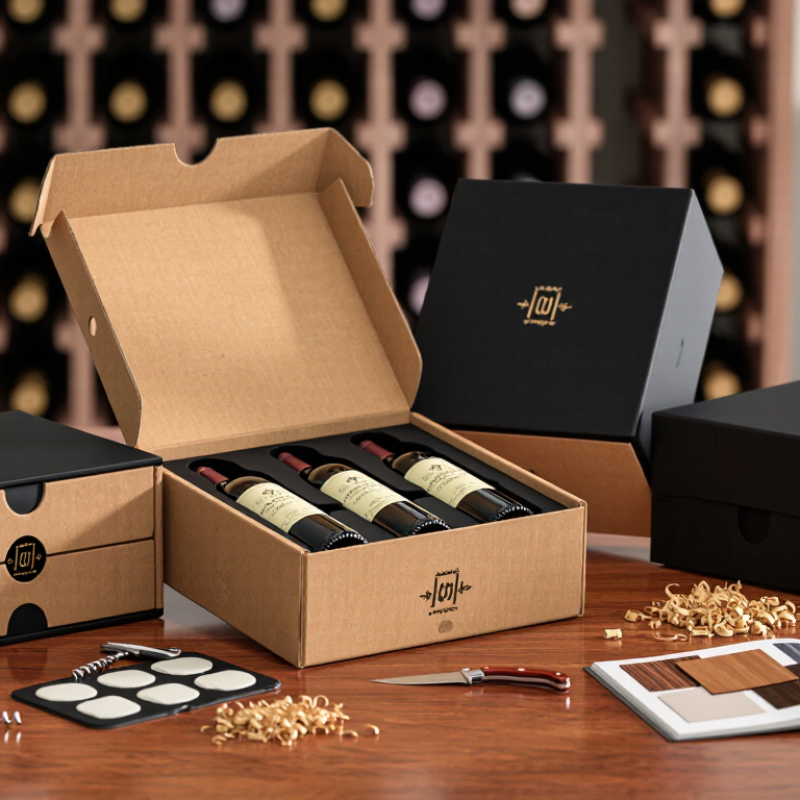
This guide reviews 10 wine box suppliers for global buyers, with practical criteria for comparing their capabilities. It considers whether suppliers can support different order sizes, provide clear specifications, and coordinate shipping with realistic lead times. The Wine Box is both a protective package and a visible part of the wine experience. Yet no supplier is right for every business. A small winery may value flexible quantities; a large importer may prioritize repeatable production and dependable logistics. Ask direct questions. Check the details. Then compare promises with samples, documentation, and actual service. One point deserves reflection: the lowest quoted price may not represent the lowest total cost once freight, damage risk, and rework are considered.
10 Best Wine Box Suppliers for Global Buyers

Understanding Wine Box Suppliers and Global Sourcing Needs

Wine box suppliers do more than provide a container. They help buyers match packaging to bottle size, shipping routes, storage conditions, and presentation needs. A box that fits one bottle securely may leave too much movement around another. Ask for internal dimensions, board thickness, and insert details before approving a sample. Small gaps matter.

Global sourcing adds practical questions. Can the supplier provide repeatable specifications, clear production timelines, and export-ready packing details? Request a physical sample and inspect the folds, dividers, print alignment, and closure. A neat sample is useful, but it does not prove every production run will look the same. That deserves a second check. Confirm minimum order quantities, payment terms, and how defects are handled, preferably in writing. Also compare the full landed cost, not just the unit price; freight and protective outer cartons can change the calculation. Communication matters. If answers arrive slowly during sampling, coordination may become harder when schedules shift. Buyers should balance appearance, protection, cost, and lead time rather than chase the lowest quote. The trade-off is not always obvious. A heavier box may protect bottles better, yet increase shipping weight. Suppliers should explain these compromises plainly, while buyers keep their own requirements specific and realistic.

10 Best Wine Box Suppliers for Global Buyers - Understanding Wine Box Suppliers and Global Sourcing Needs

Supplier types below are anonymized sourcing options, not named companies or a verified ranking. Minimum order quantities and lead times are indicative planning ranges; actual terms depend on box dimensions, print requirements, materials, tooling, and destination.

Supplier type Typical box or packaging solution Best suited for Indicative MOQ Typical production lead time Global sourcing checks
Folding carton converter Printed paperboard cartons with dividers or inserts Retail-ready single-bottle and multi-bottle packaging 1,000–5,000 units 2–5 weeks after artwork approval Confirm board grade, bottle-fit tolerances, print proof, and packed-carton dimensions.
Rigid setup-box manufacturer Rigid paperboard gift boxes with fitted inserts Premium gifting, launches, and corporate orders 500–2,000 units 3–6 weeks Check insert protection, surface-finish samples, dimensional consistency, and shipping volume.
Corrugated packaging producer Single- or multi-bottle corrugated shipping boxes E-commerce fulfillment and protective transit packaging 500–3,000 units 2–4 weeks Request transit-test details and verify box strength against bottle weight and shipping conditions.
Wooden wine-crate maker Wooden cases, crates, and presentation boxes Cellar collections, premium gifts, and reusable packaging 100–500 units 3–8 weeks Check wood species, finish, weight, export packing, and applicable import requirements for wood packaging.
Molded-pulp packaging supplier Fiber-based bottle trays, end caps, and protective inserts Plastic-reduction projects and bottle protection in transit 5,000–20,000 units 4–8 weeks, especially when tooling is required Confirm tooling charges, recycled-fiber content, fit testing, and moisture performance.
Short-run digital packaging printer Digitally printed cartons and limited-run gift boxes Seasonal releases, product testing, and smaller orders 100–1,000 units 1–3 weeks Ask about print-area limits, color proofing, per-unit cost at higher volumes, and reorder consistency.
Protective insert specialist Paperboard, molded-fiber, or foam bottle inserts Custom bottle shapes and protective packaging systems 500–2,000 units 2–6 weeks, depending on sample and tooling needs Test the insert with the actual bottle and complete package; confirm material compatibility and fit.
Paper-based gift-packaging converter Printed sleeves, carriers, and paperboard wine gift packs Promotional packaging and retail gift assortments 1,000–3,000 units 2–5 weeks Check handle strength, bottle retention, print accuracy, and whether the pack is designed for carrying or shipping.
Sustainable-packaging converter Recycled or certified paperboard boxes and fiber inserts Buyers with documented material and packaging goals 1,000–5,000 units 3–6 weeks Request current, relevant certification documents and clarify which components and materials they cover.
Integrated packaging manufacturer Coordinated cartons, inserts, labels, and shipping cases Multi-format programs and consolidated procurement 2,000–10,000 units across components 4–8 weeks for coordinated production Confirm component-level specifications, production scheduling, quality controls, and responsibility for export documentation.
Planning ranges are general industry estimates, not supplier quotes. Confirm specifications, samples, shipping terms, applicable food-contact requirements, and delivery timelines directly before placing an order.

Criteria for Evaluating International Wine Box Suppliers

International wine box suppliers should be judged on more than price and print quality. Ask for board grade, flute profile, bottle-separator dimensions, and compression-test results. A sample should hold bottles firmly without excessive movement, even after exposure to damp storage conditions.

Test it. A neat sample can still fail after a humid port week, so request samples from a production run and conduct transit trials before placing a large order.

Check quality controls, material traceability, lead times, and the supplier’s process for handling defects. Certifications can support due diligence, but verify their scope and current status rather than relying on a logo.

Eurostat reported that the EU generated 186.5 kilograms of packaging waste per person in 2022; paper and cardboard made up 40.8% of the total. These figures make recyclability a practical sourcing question, not just a marketing claim.

Ask whether coatings, inks, and inserts affect local recycling. Paper is not automatically circular. One limitation is that recycling rules vary by destination, so a supplier’s general sustainability statement may not answer a buyer’s actual packaging requirements. Request material specifications and confirm them with local waste guidance.

Profiles of 10 Wine Box Suppliers for Global Buyers

Wine box suppliers differ in materials, printing, and export experience. The OIV’s State of the World Vine and Wine Sector in 2023 estimated global wine consumption at 221 million hectolitres, down 2.6% from 2022. For buyers, that scale makes dependable packaging and repeatable quality important.

Profile 1: A rigid-board specialist offers crisp edges and premium finishes for gift boxes. Profile 2: A corrugated producer focuses on shipping strength and practical case formats. Profile 3: A molded-pulp supplier provides protective inserts with a paper-based feel. Profile 4: A folding-carton maker suits lighter retail packaging. Profile 5: A small-batch workshop handles short runs and custom dimensions. Profile 6: A large-volume converter can support scheduled orders. Profile 7: A specialist in bottle inserts helps limit movement inside the box. Small, but useful.

Profile 8: A digitally equipped printer supports variable artwork and modest quantities. Profile 9: An export-focused supplier coordinates samples, packing details, and shipment schedules. Profile 10: A design-led producer helps refine structure and presentation. Ask each candidate for material specifications, production samples, and documented quality checks. Inspect the corners, seams, and insert fit yourself. A beautiful sample can still hide weak protection. I would also compare lead-time promises against actual order records; supplier estimates are not always precise.

Wine Production in Major Producing Countries, 2023

Wine production offers a broad indicator of where wine packaging needs may be substantial. These figures represent national production—not wine-box supplier output or market share.

Source: International Organisation of Vine and Wine (OIV), State of the World Vine and Wine Sector in 2023. Figures are in million hectolitres.

Comparing Supplier Capabilities, Pricing, and Certifications

For global buyers, wine-box suppliers should be compared on more than quoted unit price. Check board grade, flute type, insert fit, print tolerances, minimum order quantity, and production lead time. A box that protects a heavy bottle in a short local shipment may fail after weeks of humid, multi-stop transit.

Request a physical sample and a packed-shipment test. Samples matter.

Pricing needs the full landed-cost picture: tooling, printing, inserts, freight, duties, and the cost of damaged bottles. The OIV’s State of the World Vine and Wine Sector 2023 estimated global wine production at 237 million hectolitres, while consumption was about 221 million. That gap is a reminder that orders can shift; flexible minimums may be worth a modest unit-price premium.

Still, a supplier’s “flexible” promise should be confirmed in writing.

Certifications help screen capability, but they do not replace audits. Ask for current ISO 9001 quality-management and ISO 14001 environmental-management certificates, then verify the issuing body, site, and scope. The US EPA’s Advancing Sustainable Materials Management report estimated that containers and packaging made up 28.1% of US municipal solid waste in 2018. This is broad packaging data, not wine-box-specific evidence. Compare recycled-content claims with test results, and request compression and transit-test records.

Paperwork can look polished. The factory may tell a different story.

Selecting a Supplier for Your Market and Requirements

A wine box supplier should fit the destination market, not just offer an attractive sample. The International Organisation of Vine and Wine reported global wine consumption of about 214 million hectolitres in 2024, the lowest level since 1961. Demand shifts make flexible order quantities and dependable lead times valuable. Ask for production capacity, seasonal schedules, and clear minimum-order terms. A low unit price means little if cartons arrive late.

Check the box against the bottle, inserts, and shipping route. Request samples with the exact bottle shape and weight, then test stacking, closure strength, and movement during transit. Small details matter. Ask for material specifications and written quality checks, rather than relying on a catalogue image. For custom printing, confirm proof approval, colour consistency, and how damaged units are handled.

Material claims should be specific to your market. CEPI’s Key Statistics report puts Europe’s paper and board recycling rate near 79%, but local collection systems differ. Ask suppliers to identify coatings, laminates, and other components that may affect recycling. Compare this information with local buyer expectations and disposal guidance. I would avoid assuming that a paper-based box is automatically the better choice; protection, transport damage, and material recovery all deserve a closer look.

You've just added this product to the cart:

0
    0
    Your Cart
    Your cart is empty