

Choosing Fluted Coupe Glasses for a business is about more than appearance. The right glass must suit the drink, the service pace, and the way your team handles a busy shift. A fluted bowl catches light along its ridges, while a broad rim gives cocktails room for aroma and garnish. On a crowded bar, though, delicate stems and uneven stacking can become practical headaches. Small details matter.
No source was provided for a verifiable industry expert or quotation, so I won’t invent either. A useful buying principle is simple: “Choose for the service, not just the shelf.” Treat it as an editorial guideline, not a sourced expert quote. Compare capacity, glass weight, rim thickness, and stem balance in person whenever possible. Ask suppliers about replacement availability, packaging, and care instructions. Then test a sample with the drinks you actually serve. A coupe that feels balanced when empty may feel different with a chilled cocktail in hand.
This guide will help you weigh style against durability, cost, and daily usability. It will also consider how fluted detailing fits your brand, from a polished hotel lounge to a lively neighborhood bar. There is no perfect glass for every venue. Your first choice may need adjustment after real service. That is worth admitting. The best Fluted Coupe Glasses are the ones your guests notice for the right reasons—and your staff can use confidently, night after night.
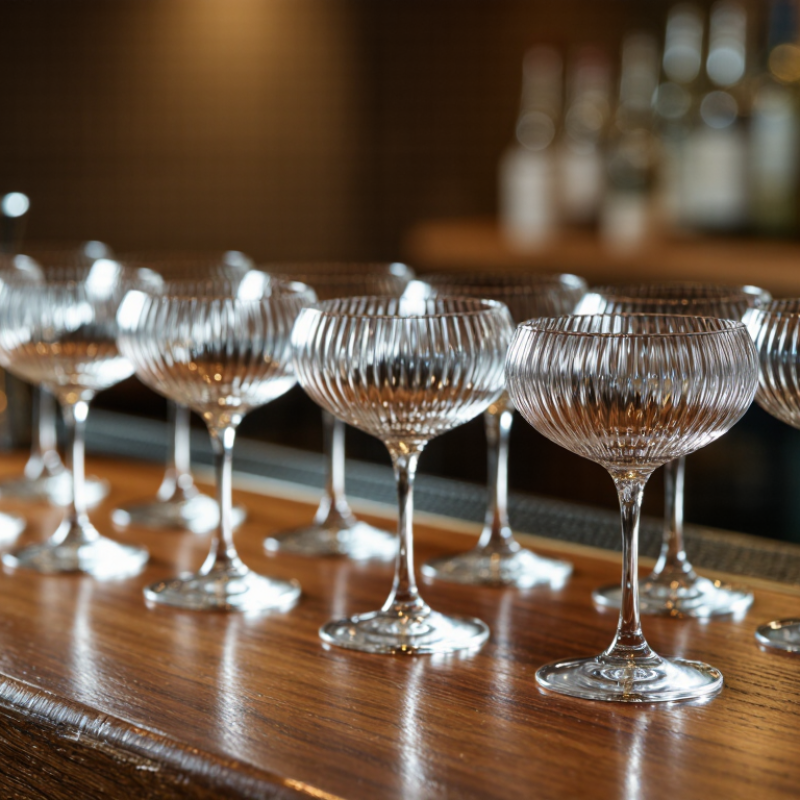
Fluted coupe glasses pair a shallow, rounded bowl with vertical ridges and a stem. The ridges catch light and give a drink a more tactile presentation. Their open shape suits sparkling wine, short cocktails, and small dessert servings. However, it releases aromas quickly and offers less spill protection than a narrower glass. The detail matters.
For a bar or hotel, choose them around the menu, not appearance alone. A 180–240 ml bowl can leave room for garnish and bubbles, though actual capacities vary by supplier. Check rim diameter, stem length, weight, balance, and glass thickness. A wide bowl can feel awkward on crowded trays. Fit matters.
Ask for a sample set before ordering in volume. Test how each glass feels with wet hands and whether it fits the service tray. Confirm whether the supplier rates it for commercial dishwashers and offers replacement stock. Fluted grooves can retain residue, so inspect them after washing. A polished presentation has little value if staff struggle during a busy shift.
| Selection Factor | Typical Options or Characteristics | Business Use | Practical Buying Guidance |
|---|---|---|---|
| Capacity | Many coupe glasses hold approximately 150–240 ml (5–8 US fl oz); exact capacity varies by design. | Cocktail service, sparkling wine, and small dessert portions. | Match usable capacity to the intended pour. Leave headspace to reduce spills, especially during busy service. |
| Bowl shape and fluting | A shallow, wide bowl with vertical or gently curved ribs; depth and rib pattern differ across models. | Creates a distinctive presentation for cocktails, sparkling wine, and plated desserts. | Check that the bowl opening suits garnishes and that the fluting is easy to clean and inspect. |
| Rim diameter | Often wider than the bowl base, with the exact diameter dependent on capacity and styling. | Allows access to aromas and provides space for garnishes or dessert toppings. | Compare rim dimensions with trays, shelves, glass racks, and the garnish style used in service. |
| Stem and base stability | Stem length and base diameter vary; a broader, level base can improve stability on service surfaces. | Useful for bars, restaurants, catered events, and table service. | Test glasses on the actual bar or table surface. Consider how easily staff can carry and polish them. |
| Glass material | Common options include soda-lime glass and lead-free crystal glass; construction may be machine-made or hand-finished. | Affects clarity, weight, appearance, and suitability for the business's handling routine. | Review product specifications and sample pieces. Confirm care instructions and any applicable food-contact requirements. |
| Durability and replacement | Durability depends on glass thickness, shape, manufacturing, handling, and washing conditions. | Important for high-volume bars, restaurants, hotels, and event venues. | Ask about breakage or replacement policies, and test samples through normal washing and service before ordering in volume. |
| Dishwasher and storage fit | Compatibility depends on the glass dimensions, dishwasher rack layout, wash cycle, and supplier care guidance. | Helps maintain efficient cleaning, drying, and glass storage between service periods. | Measure the glass against racks and shelves. Do not assume dishwasher suitability without checking the care instructions. |
| Stackability and footprint | Most stemmed coupes are not designed to stack; wide bowls can require additional shelf space. | Affects storage capacity and transport for catering or event operations. | Check dimensions and storage requirements before purchase. Use suitable racks or dividers when glasses are transported. |
| Presentation and menu fit | Clear glass emphasizes color and texture; ribbed surfaces add visual detail and may affect how light appears through the drink. | Supports a consistent look for signature cocktails, sparkling serves, and desserts. | Evaluate filled samples under your venue lighting and alongside the menu's usual garnishes and serving portions. |
| Total operating cost | Consider unit price, shipping, expected replacement needs, storage, and cleaning requirements. | Useful for comparing options across different service volumes and budgets. | Compare total cost over the expected service life, not just the purchase price, and order a small trial quantity first. |
Note: Capacity ranges are indicative examples, not a universal standard. Confirm dimensions, care instructions, and product specifications with the supplier before ordering.