

Choosing Vapes Elettrico for global markets in 2026 takes more than comparing prices or product photos. Buyers need to assess product specifications, supplier reliability, documentation, and local requirements before placing an order. That choice has real consequences. A compact device may look suitable online, yet its charging details, packaging, or product information may not fit a buyer’s market. Small details matter.
A practical comparison starts with clear, verifiable information. Check the device’s materials, battery and charging instructions, listed ingredients where applicable, and available quality-control records. Ask suppliers for current product documents and confirm that labels match the goods being offered. Do not treat broad claims as proof. Independent testing, when available, can help clarify what documentation actually supports. Requirements differ between countries and can change, so buyers should consult relevant official sources and qualified local advisers before importing or selling any product. Age restrictions and other local rules also deserve careful attention.
In 2026, dependable sourcing means tracing products back to a responsible supplier and keeping purchase records. Review sample packaging, warranty terms, shipping conditions, and the process for handling defects. A polished catalogue is not enough. Nor is the lowest quote always the best value. Some details may remain unclear until questions are asked; that is a reason to pause, not guess. Use this guide to compare options methodically, identify gaps in the evidence, and make decisions suited to your market and responsibilities.
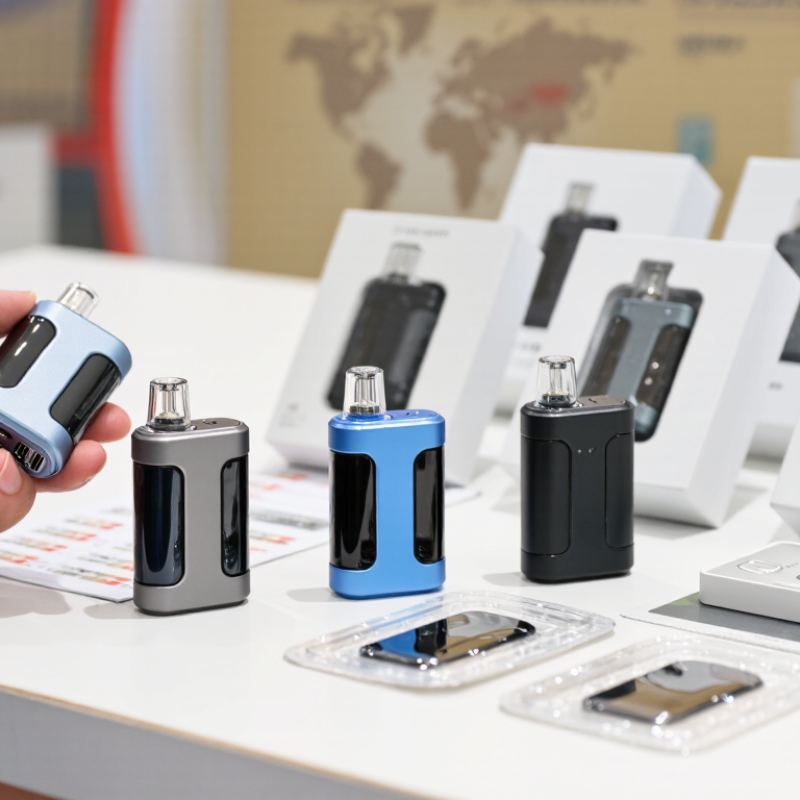
“Vapes Elettrico” is a broad retail phrase for powered devices that heat liquid into an inhalable aerosol. It is not a precise engineering class. Common types include cig-a-likes, pen-style devices, pod systems, and box-style devices with refillable tanks. Cig-a-likes resemble small traditional cigarettes. Pens are longer, with a tube-shaped body and a tank or cartridge. Pod systems use compact, replaceable or refillable pods. Box-style devices are larger and often offer more adjustable settings. Categories can overlap, so appearance alone may not explain a device’s operation.
That distinction matters. Grand View Research estimated the global e-cigarette and vape market at US$26.7 billion in 2023, projecting 30.6% annual growth from 2024 to 2030. This is a commercial forecast, not a measure of product safety or quality. WHO reported in 2024 that more than 100 million people vape worldwide, including at least 15 million young people aged 13–15. WHO also warns that e-cigarette aerosol can contain harmful substances, and nicotine can cause dependence. Buyers comparing device types should check the device’s intended materials, power source, and maintenance requirements. Labels are not always clear. A product category does not tell the whole story.
| Device Type | Definition and Typical Configuration | Consumable and Refill Method | Power and Battery Characteristics | Maintenance Considerations | Checks for Global Buyers |
|---|---|---|---|---|---|
| Disposable vape | A compact, usually prefilled device designed to be discarded when its e-liquid or battery is depleted. Some models are rechargeable; others are not. | Typically uses a sealed, prefilled reservoir and is not intended for routine refilling. | Uses a built-in battery. Capacity and charging features vary by model; a rechargeable battery does not necessarily make the device refillable. | Generally requires little routine maintenance, but the complete device needs appropriate disposal after use. | Check local rules on sales, nicotine limits, single-use products, battery charging, packaging, and electronic-waste disposal. |
| Closed-pod system | A reusable battery unit that accepts prefilled, replaceable pods made for the corresponding device system. | Replace the pod when empty or no longer usable; pods are generally not designed for user refilling. | Rechargeable battery with power and charging details that differ across models. | Keep electrical contacts clean and replace pods as directed. Pod compatibility is system-specific. | Confirm pod availability, permitted nicotine concentrations, labeling requirements, and whether the device and pods can be sold in the destination market. |
| Open-pod system | A rechargeable device with a pod or small tank intended to be filled with compatible e-liquid. | Refillable reservoir; coils may be integrated into the pod or replaceable, depending on the design. | Usually rechargeable. Output may be fixed or adjustable, and battery capacity varies by model. | Requires refilling and periodic replacement of pods or coils. Follow the manufacturer’s instructions to reduce leakage and damage. | Check e-liquid compatibility, filling design, spare-part supply, electrical safety documentation, and applicable liquid and labeling rules. |
| Vape pen or tank system | A pen-shaped or tube-style battery unit paired with a tank or clearomizer that holds e-liquid and contains a coil. | Usually filled by the user; the coil or coil head is replaced periodically, depending on the design. | Commonly rechargeable. Some devices provide adjustable output, while simpler versions use a fixed setting. | Needs regular filling and cleaning, plus coil replacement. Tank, coil, and battery connections must be compatible. | Verify charging specifications, replacement-coil availability, tank capacity rules, and relevant transport and product-safety requirements. |
| Box mod with tank | A larger device with a box-shaped power unit, often offering adjustable output, paired with a compatible tank. | Typically uses refillable tanks and replaceable coils; particular configurations vary. | Often offers adjustable power. Battery arrangements and charging methods vary, so buyers should check the device’s instructions and electrical specifications. | Requires user familiarity with settings, coil replacement, and battery handling. Use only compatible components and follow the supplied safety guidance. | Review battery configuration, charging protections, conformity documents, spare-part supply, and destination-market restrictions before purchase. |
Definition: “Vapes Elettrico” can be used to describe electrically powered vaping devices that heat a liquid to create an inhalable aerosol. Device designs, ingredients, nicotine content, and legal classifications vary. Buyers should verify current local laws and product requirements in each destination market; nicotine-containing products are addictive, and vaping is not risk-free.