
How to Find a Reliable Fried Melon Seeds Factory?

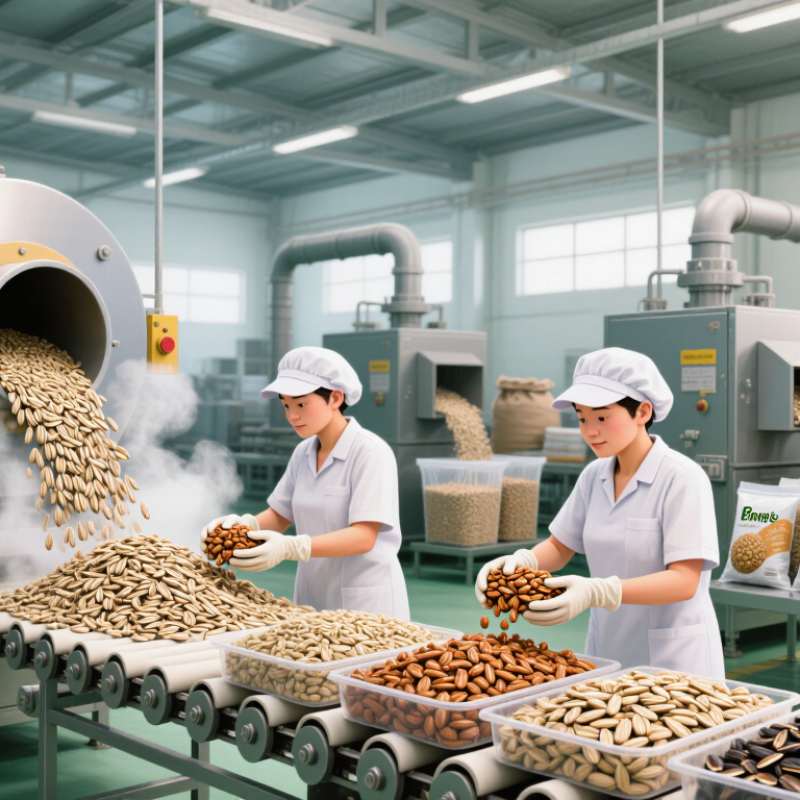
Choosing a Fried Melon Seeds Factory takes more than comparing prices or browsing attractive product photos. A dependable partner should be able to explain how seeds are sourced, cleaned, roasted, seasoned, and packed. Ask for evidence, not only promises. Production records, batch identification, and clear answers about sanitation and quality checks help buyers judge whether a supplier’s process is consistent.

Small details matter. Examine sample seeds for even roasting, crisp texture, fresh aroma, and seasoning that does not overpower the natural flavor. Check the packaging seal and ask how the factory protects products from moisture during storage and shipping. If possible, compare samples from different production batches. One good sample is encouraging, but it is not proof of lasting consistency. I would be cautious about making a decision from a single tasting.

Useful conversations go beyond the product itself. Ask about minimum order quantities, lead times, customization options, and how the factory handles complaints or quality concerns. Request relevant certifications and supporting documents, then confirm that they match the products and facility being discussed. A polished brochure can still leave important questions unanswered. No checklist removes every uncertainty, and smaller factories may have limitations worth weighing honestly. Still, clear communication, traceable batches, and repeatable product quality provide a practical basis for choosing a supplier you can work with over time.
How to Find a Reliable Fried Melon Seeds Factory?

Understanding Fried Melon Seeds and Your Sourcing Requirements

Fried melon seeds are not one uniform product. Confirm the botanical species, origin, size grade, and whether the seeds are shell-on or kernels. Then define the roast color, crunch, salt level, and seasoning you need. A sample should be assessed after cooling, not straight from the roaster; warm seeds can hide soft texture or stale-oil notes. Small details matter. Ask suppliers for batch-specific moisture, microbiological, and allergen records, plus traceability from raw seed lot to finished pack.

Storage deserves equal attention. FAO’s 2023 SDG progress reporting estimated that 13.2% of food was lost globally after harvest and before retail in 2021. That is not a melon-seed figure, but it underscores why handling and storage records matter. Check how the factory controls humidity, protects seed stock from pests, and prevents contact with strong-smelling materials. WHO recommends adults consume less than 2,000 mg of sodium daily; use that benchmark when setting a salt specification, not as a substitute for product testing. Request a recent certificate of analysis and compare several production lots. A polished sample can still mislead. I would also ask for packaging specifications, especially the barrier against moisture and oxygen, and verify shelf-life claims under stated storage conditions. One awkward point: a factory may meet every document requirement yet still vary between roasts, so repeat sampling matters.

Identifying Potential Fried Melon Seeds Factories

When identifying potential fried melon seeds factories, look for suppliers that can explain where their raw seeds come from and how batches are handled. Search food-industry directories, regional trade fairs, and importer referrals, then confirm that each candidate roasts and packs seeds at its own facility. A trading office may be useful, but it is not the same as a production site. Ask about capacity and the steps for sorting, roasting, cooling, and packaging. Ask for specifics.

A factory visit, in person or by live video, can reveal details that a brochure misses: clean work surfaces, separated raw and finished products, and orderly packaging areas. Request samples from more than one production batch and compare size, roast color, crunch, and freshness. Ask how the factory records batch dates and handles customer complaints; clear answers matter more than polished sales language. A neat sample is not proof of consistent production. Review available quality records and confirm that they match the products being offered. Some promising suppliers may still have gaps in their paperwork, so note what needs clarification before moving forward.

How to Find a Reliable Fried Melon Seeds Factory?

Identifying Potential Fried Melon Seeds Factories

Use these suggested weights to compare potential suppliers. Verify food-safety systems, batch traceability, and process controls with documents and an on-site or remote audit; assess product quality with samples. The percentages are a practical screening framework, not industry survey data.

Verifying Factory Credentials, Capacity, and Food Safety Controls

A reliable fried melon seeds factory should be able to show current business credentials and documents for the specific production site. Check that the facility name and address match across records. Confirm important certificates with the issuing organization, and ask when the latest audit took place. Paper can look convincing. Request traceability examples, such as how a finished batch is linked to incoming seed lots and packing dates.

Capacity claims need practical checks. Ask about normal monthly output, seasonal peaks, and the number of roasting and packing shifts. If possible, tour the site or arrange a live video walk-through. Look for clear separation between raw materials, roasting, cooling, and finished goods. Compare stated output with equipment size and operating hours. Ask for recent production records, not just a maximum figure. Consistent roast color and intact seals matter. A sample can help, but one good batch does not prove steady performance.

Food safety controls should be visible in daily routines. Ask how staff monitor cleaning, pest activity, foreign-material detection, and product moisture. Review batch codes, retained-sample procedures, and records showing how problems were corrected. No system is perfect. A polished checklist can still miss a rushed shift or a weak handoff, so ask how controls are checked across different workdays. A clean tour is useful, but it captures one moment, not the whole operation.

Evaluating Product Samples and Manufacturing Consistency

How to Find a Reliable Fried Melon Seeds Factory?

Evaluating Product Samples and Manufacturing Consistency

A reliable factory should provide samples from routine production, not only a specially prepared batch. Check seed size, roast color, salt distribution, crispness, and the aroma after opening the pouch. Repeat the tasting with samples from different production dates. One pouch is insufficient. The FAO’s 2019 State of Food and Agriculture estimated that 14% of food is lost between harvest and retail; this broad figure is not specific to melon seeds, but it underscores why careful handling and batch controls matter.

Compare samples using the same simple score sheet, and ask the factory to record key process settings for each lot. ISO 2859-1 provides an established framework for attribute-based sampling inspection; it is not a product-quality certification. For a practical check, inspect randomly selected packs for broken seeds, uneven seasoning, seal defects, and unexpected changes in texture. Where relevant, request moisture or water-activity test results from a qualified laboratory. A strong sample is encouraging, but it cannot prove every production run will match. Ask how deviations are recorded and corrected.

Comparing Pricing, Contracts, and Delivery Arrangements

A reliable fried melon seeds factory should quote more than a price per kilogram. Ask for the seed grade, roast level, seasoning, moisture specification, packaging weight, and inspection method behind each quote. Compare the landed cost, including samples, cartons, freight, and any testing fees. The FAO reported that 13.2% of food was lost between harvest and retail in 2021. That figure covers food broadly, not fried seeds specifically, but it shows why handling and transit deserve attention. Request a recent production sample and check its crunch, aroma, and seal after several days.

Put the details in the contract: approved sample, batch tolerances, payment milestones, delivery window, and remedies for damaged or late goods. Ask how the factory records lot numbers and handles rejected batches. The World Bank’s 2023 Logistics Performance Index assessed logistics across 139 economies, highlighting customs, tracking, and timeliness as distinct performance areas. Use those same questions with suppliers: Who books transport? Can they provide tracking? What happens if a shipment misses its slot? For a first order, a smaller trial shipment may cost more per unit, but it limits exposure. I would still verify every assumption; a clear contract cannot fix a vague product specification.

How to Find a Reliable Fried Melon Seeds Factory? - Comparing Pricing, Contracts, and Delivery Arrangements

Illustrative comparison for sourcing discussions, not live supplier quotations. Prices and lead times are indicative only and should be confirmed against the same product specification, order quantity, packaging, destination, and Incoterm.

Comparison Point Offer A: Lower-Cost Option Offer B: Balanced Option Offer C: Smaller-Batch Option
Product basis Roasted salted black melon seeds; bulk food-service grade Roasted salted black melon seeds; export-oriented retail grade Roasted salted black melon seeds; trial or specialty batch
Indicative quoted price US$3.60–4.20/kg, FOB named port US$4.10–4.90/kg, FOB named port US$4.80–6.00/kg, EXW or FOB, depending on order size
Minimum order quantity About 1,000 kg About 500–1,000 kg About 100–300 kg
Packaging assumption Commonly 10–25 kg food-grade inner liner and outer bag; confirm exact configuration Bulk bags or individually packed retail units; printed packaging may require a higher minimum Standard unprinted pouches or cartons; custom packaging may not be economical
Payment terms to discuss Often a deposit with the balance due before shipment; agree milestones in writing Deposit and balance linked to production documents or pre-shipment inspection Payment in advance may be requested for a small first order
Contract points to specify Product grade, salt level, permitted broken-seed percentage, net weight, and remedies for non-conformance Full specification, approved sample, packaging artwork, test documents, inspection method, and claim deadline Sample approval, batch identity, tolerances, cancellation terms, and who pays for testing
Quality checks Request a recent batch record and agree on moisture, foreign-matter, and breakage limits Agree on a pre-shipment sample and applicable food-safety and destination-market documentation Check sample consistency and verify that the trial batch uses the intended production process
Indicative production lead time About 20–35 days after specification and packaging approval About 25–40 days, depending on packaging and testing requirements About 15–30 days for standard packaging; custom packaging can add time
Delivery arrangement FOB means the seller delivers goods on board at the named port; buyer arranges main freight and insurance Compare FOB with a separately itemized CIF quote; confirm destination port and insurance coverage EXW places more transport responsibility on the buyer; confirm pickup location and export-clearance responsibilities
Best suited for Buyers prioritizing unit price and able to manage larger orders and freight Buyers seeking a balance of order flexibility, documented checks, and export coordination Buyers conducting a market test or validating product quality before scaling
Reliability checks before deposit Verify the legal entity and factory address, request a current business license and product documents, confirm bank-account details independently, approve a production-representative sample, and put specifications, inspection rights, delivery dates, and dispute terms in the signed contract.
You've just added this product to the cart:

0
    0
    Your Cart
    Your cart is empty