What Is a Heat Resistant Plastic Bucket Used For?
A Heat Resistant Plastic Bucket is designed to handle warm materials and demanding cleaning routines that can damage ordinary plastic containers. Its usefulness depends on the resin, wall thickness, handle design, and the temperature listed by its manufacturer. “Heat resistant” does not mean heatproof. A bucket left beside a hot oven may soften, warp, or become unsafe to lift.
In kitchens, workshops, laboratories, and manufacturing areas, these buckets can hold warm water, cleaning solutions, or process materials when the product is rated for that specific use. Picture a freshly washed tool dripping into a sturdy bucket; small design details, such as a reinforced rim and secure grip, matter. Check the product’s temperature range and chemical compatibility before filling it. Never assume that a familiar-looking bucket can handle boiling liquids.
A reliable expert quotation needs a verifiable source, and none was provided with the request. Rather than invent an industry specialist or misattribute a sentence, this introduction leaves that quote out. That gap matters. For a trustworthy article, add a named plastics engineer’s verified comment and identify the source. Until then, the safest guidance is practical: follow the manufacturer’s specifications, inspect the bucket for damage, and allow hot contents to cool when the rating is unclear.
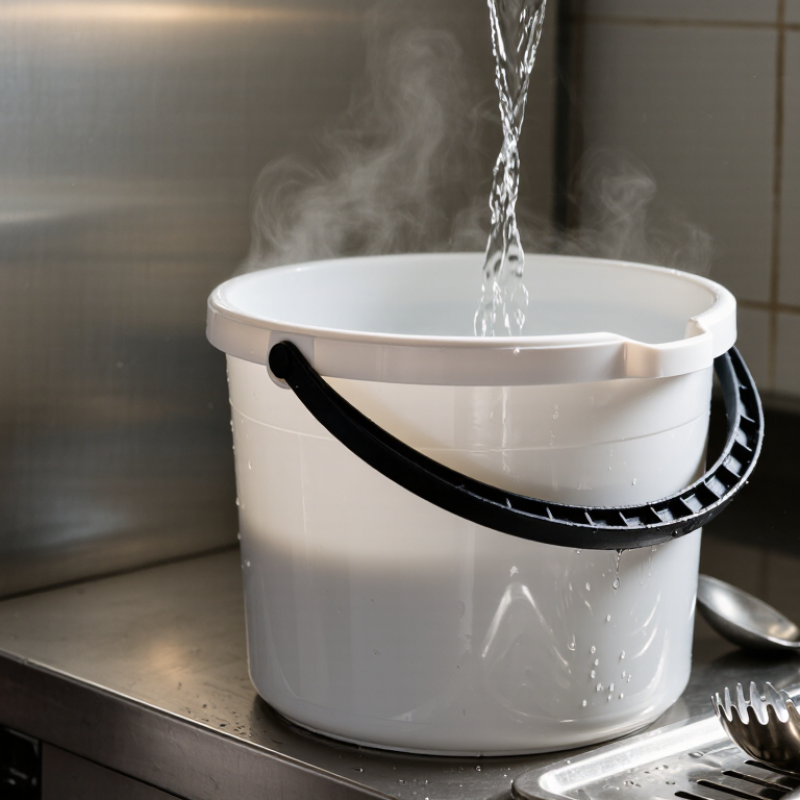
What Defines a Heat-Resistant Plastic Bucket?
A heat-resistant plastic bucket is defined by how well its material keeps its shape and strength at elevated temperatures. Heat tolerance is specific. It depends on the plastic type, wall thickness, and exposure time, so “heat-resistant” does not mean safe for every hot liquid. Some plastics handle warm water but soften under prolonged heat. Others may withstand a brief exposure yet become brittle after repeated heating and cooling. Check the stated temperature range, and distinguish continuous-use ratings from short-term limits. The label can still leave questions.
The whole bucket matters, not just its walls. A handle, lid, seam, or molded grip may have a lower heat limit than the main body. Sudden temperature changes can also cause stress: pouring hot water into a bucket kept in a cold room may lead to warping or cracking. Details matter. Inspect the bucket for clear care instructions, and avoid assuming that a thicker wall guarantees greater heat resistance. If the intended temperature or contact time is not specified, choose a container with an explicit rating for that use.
How Heat-Resistant Plastics Tolerate High Temperatures
What Is a Heat Resistant Plastic Bucket Used For?
How Heat-Resistant Plastics Tolerate High Temperatures
A heat-resistant plastic bucket can hold warm liquids, cleaning solutions, or materials that would soften an ordinary container. Its performance depends on the resin and the time exposed to heat. Typical material data place polypropylene’s melting range near 160–170°C and high-density polyethylene’s near 125–135°C. These are approximate melting points, not safe filling temperatures. That distinction matters. ASTM D648 measures heat-deflection temperature under loads of 0.455 and 1.82 MPa; ISO 75-1:2020 also sets out a loaded heat-deflection test. These standards describe controlled laboratory measurements, not guarantees for everyday use.
Heat makes polymer chains move more freely, so a bucket may bend before it melts. A heavy hot liquid can also distort the base or pull on the handle. Wall thickness, reinforcing ribs, and the bucket’s shape help it keep its form, but they do not make every resin suitable for every temperature. Check the product’s stated continuous-use and brief-contact limits, and consider how full the bucket will be. A lab value can mislead. I would not treat a melting point as permission to pour in near-boiling liquid; repeated heating may weaken the bucket even when it still looks intact.
What Is a Heat Resistant Plastic Bucket Used For? - How Heat-Resistant Plastics Tolerate High Temperatures
| Plastic Type | Typical Heat Capability | Potential Bucket Uses | Important Limitations |
| Polypropylene (PP) | Many grades are used continuously at temperatures around 90–100°C; brief exposure limits vary by grade and load. | Warm-water handling, laboratory work, and some food-processing tasks when the bucket is specifically rated for them. | Can soften or deform under heat, especially when filled with a heavy load. Do not assume it is suitable for boiling liquids. |
| High-density polyethylene (HDPE) | Common grades are generally suited to lower continuous temperatures, often around 60–80°C; exact limits depend on the grade and design. | General-purpose liquid and material handling where contents are warm rather than very hot. | May soften, warp, or lose strength as temperature rises. Hot contents and prolonged heating can increase deformation risk. |
| Chlorinated polyvinyl chloride (CPVC) | Selected CPVC grades can handle continuous service temperatures around 90°C, subject to product design and chemical exposure. | Specialized industrial or laboratory containers where both heat and chemical compatibility are considered. | Not every CPVC product is manufactured as a bucket. Check the container’s temperature rating and compatibility with the contents. |
| Polyvinylidene fluoride (PVDF) | Some PVDF grades are rated for continuous service in the approximate range of 120–140°C. | Specialty chemical processing and laboratory applications requiring higher heat and chemical resistance. | Higher material cost and product-specific limits apply. A PVDF material rating does not automatically establish a finished container’s safe working temperature. |
| Perfluoroalkoxy alkane (PFA) | Many PFA grades have continuous-use ratings near 260°C, but the finished container and its design can have lower limits. | Specialized high-temperature laboratory or industrial handling where a compatible, purpose-built container is available. | Uncommon for ordinary buckets and typically selected for demanding applications. Verify the rating of the complete container, not just the resin. |
Note: Temperature figures are approximate examples for material grades, not universal guarantees for finished buckets. Heat resistance depends on the exact resin, wall thickness, load, exposure time, and chemical contents. Follow the container manufacturer’s stated limits, and do not place a plastic bucket over a flame or use it for hot liquids unless it is specifically rated for that purpose.
Common Uses in Food, Industry, and Household Settings
A heat-resistant plastic bucket can hold warm food ingredients, bakery fillings, sauces, or wash water, provided its material is rated for the temperature and intended use. In commercial kitchens, the U.S. FDA Food Code 2022 sets hot-held food at 135°F (57°C) or above. That is a food-holding benchmark, not proof that any plastic bucket can safely contain food at that temperature. Choose food-contact-grade material, check its stated temperature range, and avoid direct heat. Not for every task. A bucket that softens, warps, or has a damaged surface should be taken out of food use.
In industrial settings, heat-rated buckets can move warm process materials, collect parts after washing, or store dry ingredients near equipment. Chemical compatibility matters as much as heat tolerance; confirm both against the manufacturer’s specifications. At home, the same bucket may carry warm cleaning water, hold garden supplies, or organize items in a utility room. Check the lid, too. A seal can deform even when the bucket body remains firm. The U.S. EPA’s 2018 Facts and Figures report estimates that containers and packaging generated 82.2 million tons of municipal solid waste. That figure covers many materials, not buckets alone, but it puts everyday storage choices in context. “Heat-resistant” is not a universal rating; matching the bucket to the actual task takes a little more care.
How to Choose a Bucket for a Specific Task
Choosing a bucket starts with the task, not just its advertised heat resistance. Check the stated temperature range and whether it applies to brief contact or prolonged use. A bucket that holds warm rinse water may not suit near-boiling liquid. Heat can also soften some plastics, especially when the bucket is full and difficult to support. Never assume it can sit on a stove or touch an open flame.
Match the material to what will go inside. For food preparation, confirm that the bucket is intended for food contact and can be cleaned thoroughly. For cleaning solutions, check chemical compatibility; heat may change how a plastic reacts.
Look at the handle, base, and rim, too. A wide base helps on a wet floor, while a secure handle matters when carrying several liters. Leave room at the top to reduce splashing. Small detail, big difference.
It is easy to focus on capacity and overlook grip, but a hot, heavy bucket is awkward to move. If the task involves changing temperatures, repeated use, or uncertain liquid contents, check the maker’s specifications before filling it. A little hesitation here is sensible.
Safe Use, Cleaning, and Temperature Limitations
What Is a Heat Resistant Plastic Bucket Used For?
Safe Use, Cleaning, and Temperature Limitations
A heat-resistant plastic bucket may suit warm-water tasks, mixing, or temporary storage, but its safe range depends on the specific material and design. Check the bucket’s label or product instructions before adding hot liquids. “Heat resistant” does not mean safe for boiling water, stovetop use, or food contact. That distinction matters. Temperature limits may also change with exposure time, liquid weight, and repeated heating. If the plastic softens, bends, or gives off an unusual odor, stop using it for the task. A firm-looking bucket is not proof that it can handle more heat.
Let hot contents cool before cleaning, and use mild soap with a soft sponge. Avoid abrasive pads and harsh solvents, which can scratch or weaken some plastics. Don’t shock a warm bucket with icy water; sudden temperature changes can cause stress or warping. Rinse well, air-dry it, and inspect the base and handle for cracks before reuse. Small scratches are easy to overlook. For food or drink, use the bucket only when it is explicitly marked food-safe, and retire it if damage or persistent odors appear.