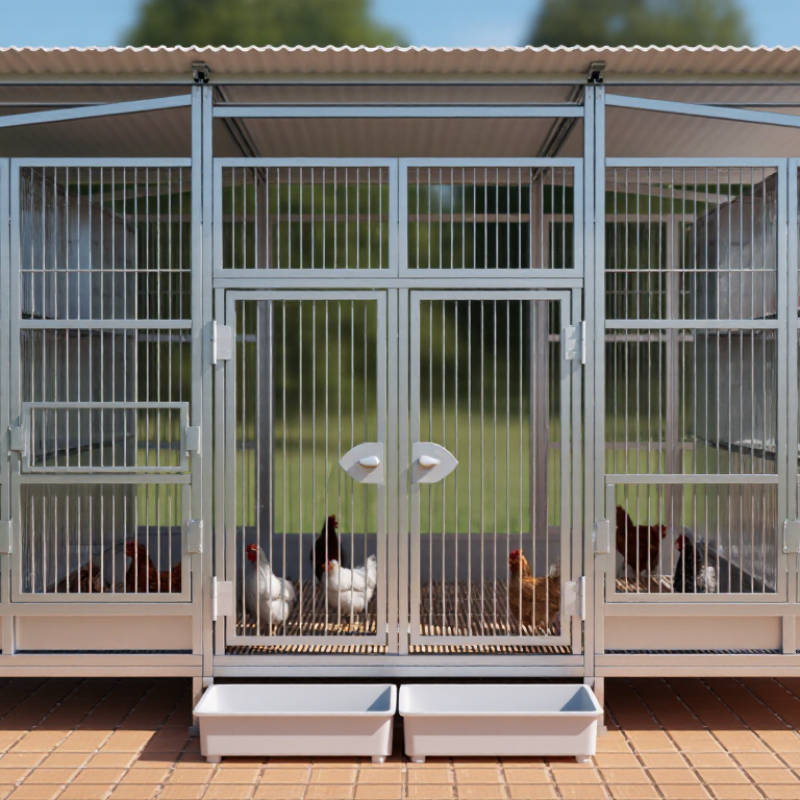
Choosing the right Chicken House Cage in 2026 means looking beyond price and polished product photos. The best option should give your flock enough room to move, rest, reach feed and water, and behave comfortably. Start with the number, size, and age of your birds. Then check the cage’s dimensions, ventilation, flooring, cleaning access, and materials. A door that looks generous online may feel awkward when you are holding a feed bucket. Small details matter.
Poultry housing specialist Dr. Jacquie Jacob is known for practical guidance on poultry care. A useful principle for this guide is: “Choose housing around the birds’ daily needs, not the product’s sales claims.” Treat that as a decision rule, not a substitute for checking the cage yourself. Look closely at corners, latches, and surfaces where dirt can collect. Ask how often cleaning is needed and whether you can inspect every bird without difficulty. No cage is perfect. A feature that suits one flock may frustrate another, and that is easy to overlook when comparing specifications.
This guide will help you weigh capacity, comfort, durability, hygiene, and long-term value. It will also flag common trade-offs, including space versus footprint and low upfront cost versus easier maintenance. Bring a tape measure. Picture the daily routine. Then choose a Chicken House Cage that fits your birds and your actual care practices—not an idealized version of them.
Chicken-house cages range from compact layer cages to open aviaries, free-range housing, and backyard coops with attached runs. Conventional cages separate hens into small groups and make feeding and egg collection straightforward, but offer limited movement. Enriched cages add perches, nesting areas, and scratching space. Cage-free aviaries let birds move between levels; they need careful litter management and clear pathways to reduce crowding. Free-range systems add outdoor access, but weather and predator exposure require sound shelter and fencing. Different needs.
For a small flock, Penn State Extension’s small-flock housing guidance suggests
A cage or coop should allow easy access to drinkers, dry bedding, and droppings trays; check whether doors and removable panels let you clean corners without awkward reaching. A tidy drawing can still mislead. Before choosing, picture a wet morning, a full feeder, and one bird blocking the narrowest passage. If routine cleaning already feels difficult, the layout probably needs another look.
Choosing a chicken house cage starts with the flock you expect to keep, not the largest model available. University of Minnesota Extension guidance suggests roughly 3–5 square feet of indoor floor space per bird, with about 8–10 square feet outdoors. Treat these as planning ranges, not guarantees: larger breeds, long periods indoors, or muddy runs may require more room. Measure usable floor area, excluding nest boxes and bulky feeders.
Count adult birds and likely additions. Six hens need about 18–30 square feet inside under that guidance. Add space for a feeder, waterer, and a clear route to the pop door. Crowding shows up in practical ways: damp litter, pecked feathers, and birds jostling at the entrance. It can be easy to underestimate. Measure twice.
Location changes what “enough space” means. Set the house on well-drained ground, away from standing water, and check where summer shade falls. In hot regions, prioritize cross-ventilation and afternoon shade; in cold, windy areas, reduce drafts without sealing the coop against fresh air. A flat sketch can miss winter drifts or a gate that swings into the run. Recheck your measurements against local extension guidance and the site’s seasonal conditions before choosing a cage.
How to Choose the Best Chicken House Cage in 2026?
Comparing Materials, Construction, and Weather Protection
A dependable chicken house starts with materials that suit your climate. The USDA Forest Products Laboratory’s Wood Handbook (FPL-GTR-282, 2021) explains that wood decay risk rises when moisture stays around or above 20%. For wooden frames, look for sound, treated lumber and sealed cut ends. Keep the base clear of soil, where rain splash and dampness linger. Metal frames resist rot, but thin panels can flex, and exposed edges may rust. Check joints, welds, and fasteners, not just the main panels. Small weaknesses matter.
Roof shape and drainage are just as important as material. A sloped roof sheds rain better than a flat one, while a generous overhang helps keep bedding dry. In windy areas, secure the structure to a stable base and inspect latches after storms. Ventilation must remain open above bird level; sealing every gap can trap damp air and heat. That trade-off is easy to miss. Compare local rainfall, wind, and snow exposure before choosing a design, since a cage suited to a mild yard may fail in harsher weather.
Tips: Check beneath the house after rain. Look for standing water, swollen wood, loose screws, or rust at seams. A quick inspection can reveal more than a polished product description.
| House or Run Type | Typical Materials | Strength and Security | Corrosion and Weather Resistance | Rain, Wind, and Shade Protection | Ventilation and Cleaning | Maintenance Considerations | Best Suited For |
|---|---|---|---|---|---|---|---|
| Galvanized steel mesh run | Galvanized welded wire mesh on a steel frame; mesh openings vary by product. | Rigid welded panels can provide a sturdy enclosure. Security depends on wire gauge, mesh openings, frame joints, and how the run is anchored. | Zinc coating helps protect steel from rust, but cut edges, scratches, and damaged coatings can corrode, especially in damp or coastal conditions. | Mesh provides little protection from rain or direct sun. Add a roof or covered section and wind protection where needed. | Open sides provide good airflow and make visual checks straightforward. Debris can collect around the perimeter and at ground level. | Inspect welds, fixings, coating damage, and ground-level gaps regularly. Keep the frame anchored and repair damaged sections promptly. | Outdoor runs where ventilation and a defined enclosure are priorities, with separate provision for shelter. |
| Powder-coated steel run | Steel mesh or bars with a baked-on powder-coated finish, usually on a steel frame. | Can be strong when the frame, mesh, and connections are adequately sized. A coating alone does not determine overall security. | The coating adds a protective surface, but chips or scratches may expose steel to moisture and rust. Quality of preparation and coating varies. | Like other open mesh enclosures, it does not block rain or sunlight without a solid or partly covered roof. | Open construction supports airflow and rinsing, though some finishes and joints may need gentle cleaning to avoid damage. | Check for chipped coating, loose fasteners, and rust at joints. Touch up damaged areas with a suitable coating system. | Owners seeking a finished appearance and an open-sided run, provided the enclosure is well built and maintained. |
| Timber-framed house with hardware cloth | Timber framing with small-opening galvanized hardware cloth; a solid roof and wall panels may be added. | A well-braced frame can be sturdy. Securely fixed hardware cloth is generally more robust than lightweight poultry netting for enclosing openings. | Timber can decay when persistently wet or in contact with damp soil. Galvanized mesh can corrode if its coating is damaged or unsuitable for the environment. | A pitched, waterproof roof and sheltered wall sections can provide effective protection; roof overhangs help reduce rain exposure. | Ventilation needs to be designed into the house, especially above roost level. Smooth, accessible interior surfaces simplify cleaning. | Maintain roof coverings, inspect timber for rot, and check mesh edges and fasteners. Keep wood off the ground where practical. | Permanent coops needing a combination of secure ventilation, enclosed nesting areas, and weather protection. |
| Treated or naturally durable timber house | Timber boards or panels on a timber frame, with suitable roofing and protected openings. | Solid walls resist impact and wind better than mesh, but strength depends on framing, bracing, and sound joinery. | Durability depends on timber species, treatment, detailing, and moisture exposure. Avoid materials or finishes that are unsafe for animal contact. | Solid walls and a properly installed roof can provide good shelter. Include adequate ventilation to limit condensation and moisture buildup. | Less open than a mesh run, so vents should allow fresh air without creating persistent drafts at bird level. Cleanable floors and access doors are helpful. | Inspect the roof, seals, joints, and lower boards for leaks or decay. Recoat or repair surfaces as appropriate for the material. | Colder, windy, or rainy settings where a sheltered sleeping and nesting space is needed. |
| Aluminum-frame mesh enclosure | Aluminum tubing or extrusions with wire mesh or compatible panels. | Aluminum is relatively light; frame stiffness depends on its profile, bracing, and connections. It may need secure anchoring in exposed locations. | Aluminum naturally forms a protective oxide layer and does not rust like iron or steel, but fasteners and joined materials can still corrode. | Mesh sides offer little rain or sun protection. Add a roof and sheltered area; check that lightweight sections are secured against wind. | Open sides provide airflow and easy access. Smooth frame surfaces are generally simple to wipe down. | Inspect joints, anchors, and any dissimilar-metal connections. Avoid assuming a light enclosure is secure without checking its construction. | Installations where low weight and resistance to ordinary rust are useful, with appropriate anchoring and shelter. |
| Plastic-panel or composite-panel house | Plastic or composite wall panels, sometimes combined with a metal frame and mesh vents. | Solid panels block wind and rain, but the frame and panel fixings determine impact resistance and stability. | Panels do not rust, but performance varies by material and exposure. Sunlight, temperature changes, and brittle or poorly supported panels can affect serviceability. | Solid panels can shelter birds from rain and wind when seams and roof are properly designed. Shade and ventilation still need planning. | Non-porous surfaces can be easy to wipe clean. Provide vents to prevent stagnant air and excess humidity. | Check for cracking, loose fasteners, warped panels, and blocked vents. Follow the maker’s guidance for cleaning and outdoor use. | Owners who value wipe-clean surfaces and a sheltered interior, with a design that still provides adequate airflow. |

Selection note: No single material makes a chicken house secure or weatherproof. Assess the complete structure, including mesh openings, joints, latches, roof, drainage, ground-level gaps, anchoring, and ventilation. Local predators, climate, flock size, and site conditions should guide the final choice.
A safe chicken house starts with details you can inspect by hand. Run a gloved hand along edges and joints; rough wire can injure feet or snag feathers. Check that doors latch firmly and gaps cannot trap a head or leg. Stability matters too. A wobbling frame may shift when birds crowd together or when you clean it. Recheck fasteners after moving the enclosure.
Ventilation should carry damp air and odors away without blowing cold air directly across roosting birds. Look for condensation on walls and notice whether litter stays unusually wet. A sharp ammonia smell is a warning, not a normal feature. Openings need protection from rain and predators, while still allowing steady airflow. Climate and flock size change what works, so observe conditions through both warm and cold days.
Hygiene depends on surfaces you can reach and clean. Removable trays and wide access doors help, though a clean-looking floor alone proves little. Check corners for packed droppings and inspect drinkers for leaks. Chicken welfare deserves equal attention: birds need room to turn, stretch, perch, and dust-bathe. Watch how they move. Crowding, feather wear, or repeated pecking may mean the setup needs more space or enrichment. I would not assume one design suits every flock; that is an easy mistake to make.
Choosing a chicken house cage in 2026 starts with the full cost, not the shelf price. Compare the frame, mesh, roof, fasteners, and any floor or run panels. A low price can become less attractive if thin wire bends or replacement parts are hard to find. Check whether the listed dimensions include the run, and measure your actual site before ordering. Leave space to open doors and carry feed buckets. Installation time has a cost, too.
Tips: Measure twice. Mark the footprint with string, then check gates, drainage, and shade at different times of day. Ask for a parts list and clear assembly instructions before purchase. Keep a small allowance for anchors, tools, or a missing fitting; estimates rarely capture every detail.
For installation, choose level, well-drained ground and follow the supplied assembly guidance. Secure the structure against local wind and predators, using suitable anchors and sound latches. Inspect mesh joins, hinges, and roof edges after the first week, then regularly. Remove wet bedding, clear debris from drainage paths, and tighten loose hardware. These small tasks help prevent early wear, though they do not eliminate it. Revisit the budget after one season; actual cleaning time and weather exposure may differ from your estimate. A cage that is simple to reach and repair often saves frustration over time.