How to Identify Muscovite Mica and Its Uses?
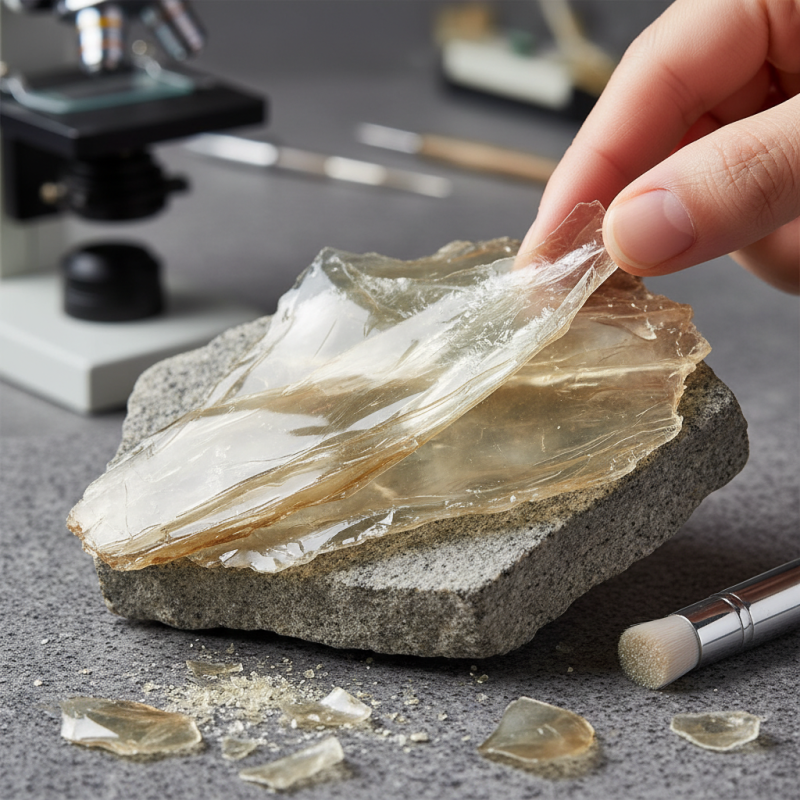
muscovite mica is a fascinating mineral found in various geological environments. This silicate mineral is characterized by its layered structure, allowing sheets to peel away easily. When you encounter muscovite mica, you may notice its shiny appearance, which can range from colorless to light shades of brown or green.
Identifying muscovite mica involves observing its luster and flexibility. It is softer than many rocks, which makes it easy to scratch with a fingernail. Such tangible features make it an appealing choice for various applications, from insulation materials to cosmetics.
Muscovite mica's unique properties can be perplexing. While its uses are abundant, not every application may highlight its strengths. It’s crucial to understand these nuances and seek deeper knowledge. Embracing the intricacies of muscovite mica can open doors to innovative uses.
Identification Characteristics of Muscovite Mica
Muscovite mica is a common mineral found in various geological environments. It is predominantly recognized for its distinctive qualities. One of the most notable identification characteristics is its layered structure. The thin sheets easily peel away and display excellent flexibility. The color usually ranges from light brown to colorless. Its shiny, reflective surface often catches the eye.
When examining muscovite, look for its crystalline form. Transparency is another key feature; pieces can be nearly clear. Under a microscope, its platy texture becomes even more apparent. The mineral has a Mohs hardness of 2 to 3, making it relatively soft. This softness allows for easy scratching with a fingernail, a helpful trait for amateurs.
Muscovite’s applications are quite varied. In electronics, it acts as an insulator due to its thermal stability. The beauty industry also values muscovite for its shimmering properties in cosmetics. Yet, not every piece is suitable for industrial use, leading to occasional misidentifications. Understanding its true characteristics is essential for any potential application.
Common Locations and Sources of Muscovite Mica
Muscovite mica is a common mineral found in various regions worldwide. This silicate mineral is often associated with granite, schist, and gneiss. You can typically spot it in areas rich in these rock types. Muscovite is also found in sedimentary rocks. It forms in igneous and metamorphic environments.
Key locations for muscovite mining include parts of the United States, such as Vermont and South Dakota. Other notable sources are found in countries like India, Brazil, and Madagascar. Each location has unique qualities that affect muscovite's appearance. Some variations present shimmering gold or silver tones, enhancing its aesthetic appeal.
While mining for muscovite, attention to detail is crucial. It's essential to differentiate muscovite from other micas. Misidentification can lead to challenges in various applications. For example, uses in electronics and cosmetics require high-purity muscovite. However, impurities can affect performance negatively. As such, sourcing muscovite involves considerable thought and careful selection.
Physical and Chemical Properties of Muscovite Mica
Muscovite mica is recognized for its unique physical and chemical properties. This mineral is characterized by its pearly luster and perfect cleavage, which allows it to be split into thin sheets. Mica sheets can be transparent or translucent and exhibit various colors, often seen in shades of green, brown, or colorless. The mineral has a relatively low density, approximately 2.8-3.0 g/cm³, making it lightweight and highly versatile.
Chemically, muscovite is a phyllosilicate mineral. Its composition mainly includes potassium aluminum silicate with the formula KAl₂(AlSi₃O₁₀)(OH)₂. Muscovite is generally stable at high temperatures and can withstand significant electric fields. Many studies, such as those published in the “Minerals Journal,” highlight its thermal resistance, which is around 700°C. These traits make it a preferred choice across various industries, including electronics and construction.
Despite its benefits, muscovite has limitations. It is not as strong as other minerals and can degrade under harsh conditions. Heavy exposure to moisture may cause delamination. Therefore, applications in environments with extreme conditions must be approached cautiously. These drawbacks necessitate a thorough evaluation of its use cases to ensure effectiveness and durability.
Physical Properties of Muscovite Mica
Industrial and Commercial Uses of Muscovite Mica
Muscovite mica is a versatile mineral with several industrial and commercial applications. It is known for its excellent insulating properties and high resistance to heat. This makes it a valuable material in electrical components, such as capacitors and insulators. Manufacturers also use muscovite in rubber and plastics, enhancing strength and durability. Its shimmering appearance contributes to products in the cosmetics industry as well.
Apart from its main uses, muscovite is found in paint formulations. It adds a unique texture and aesthetic appeal. Additionally, it acts as a filler in various materials, improving performance while keeping costs low. Many companies are exploring new applications, but it’s crucial to understand quality differences. Not all muscovite is created equal; impurities can affect performance significantly.
**Tip:** When sourcing muscovite, check for purity levels. This ensures the effectiveness of the final product.
Another interesting use involves art materials. Muscovite can be ground into a fine powder for artistic applications. Painters often value it for the sparkle it adds. However, the texture may not suit all artistic preferences, causing some trial and error. It allows for creativity but demands careful experimentation.
**Tip:** Experiment with different grinds to see what works best.
How to Identify Muscovite Mica and Its Uses? - Industrial and Commercial Uses of Muscovite Mica
| Property/Use | Description |
| Natural Mica | A natural phyllosilicate mineral used in various industrial applications. |
| Electrical Insulation | Muscovite mica has excellent dielectric properties, making it ideal for electrical insulation in capacitors and other components. |
| Cosmetics | Used in makeup products for its shimmering properties and ability to enhance color. |
| Paints and Coatings | Acts as a filler and extender in paints, improving durability and resistance to moisture. |
| Plastics | Improves heat resistance and dimensional stability in plastic products. |
| Construction | Used in drywall and roofing products for thermal insulation and fire resistance. |
| Ceramics | Enhances the strength and reduces shrinkage in ceramic products. |
| Glass Manufacturing | Added to glass formulations to modify viscosity and improve processing characteristics. |
Safety and Handling Guidelines for Working with Muscovite Mica
When working with muscovite mica, safety is paramount. This mineral can release fine dust during handling, which may irritate the respiratory system. Always wear a mask to minimize inhalation risks. Additionally, protective eyewear is essential to shield your eyes from flying particles.
Tips: Use a dust mask rated for fine particles. Keep your work area well-ventilated.
Muscovite can be slippery when wet, making it hazardous. To prevent slips, always clear your workspace of any spills or debris. Wearing non-slip footwear can also enhance safety. If you notice irritation while handling muscovite, take a break. Wash your hands immediately and seek fresh air.
Tips: Clean spills promptly. Ensure your shoes have good traction. Always listen to your body while working.
Handling muscovite mica requires careful attention to detail. Be mindful of ventilation and personal protective equipment. Keep in mind that, despite its beauty, muscovite can pose risks if not managed correctly. Create a safe working environment to enjoy the benefits of this versatile mineral.