
Shrink Film does more than tighten around a product. It can protect, bundle, label, and present items on a crowded shelf. Yet choosing the wrong film may cause cloudy displays, weak seals, or uneven shrinking. Small details matter: a sharp corner, a warm warehouse, or a fast-moving conveyor can change performance.
Packaging scholar Dr. Bruce Harte’s work supports a practical principle, paraphrased here: “Choose packaging for product protection and process fit, not appearance alone.” This is a paraphrase, not a verbatim quotation. It points to the real challenge: matching material behavior to the product, equipment, and handling conditions.
This guide examines ten common types of Shrink Film, including PVC, polyolefin, polyethylene, and specialty options. Each brings different strengths in clarity, strength, seal performance, and shrink response. Some films suit retail multipacks; others work better for heavier bundles or sensitive products. There is no universal winner. That part is easy to overlook.
The right choice depends on more than a product sample. Consider film thickness, package shape, storage conditions, line speed, and how the finished pack will be handled. A sample that looks perfect on a desk may behave differently on a production line. Testing helps expose that gap. The sections ahead compare the main film types, explain where they fit, and note practical trade-offs so buyers can make a more informed shortlist.
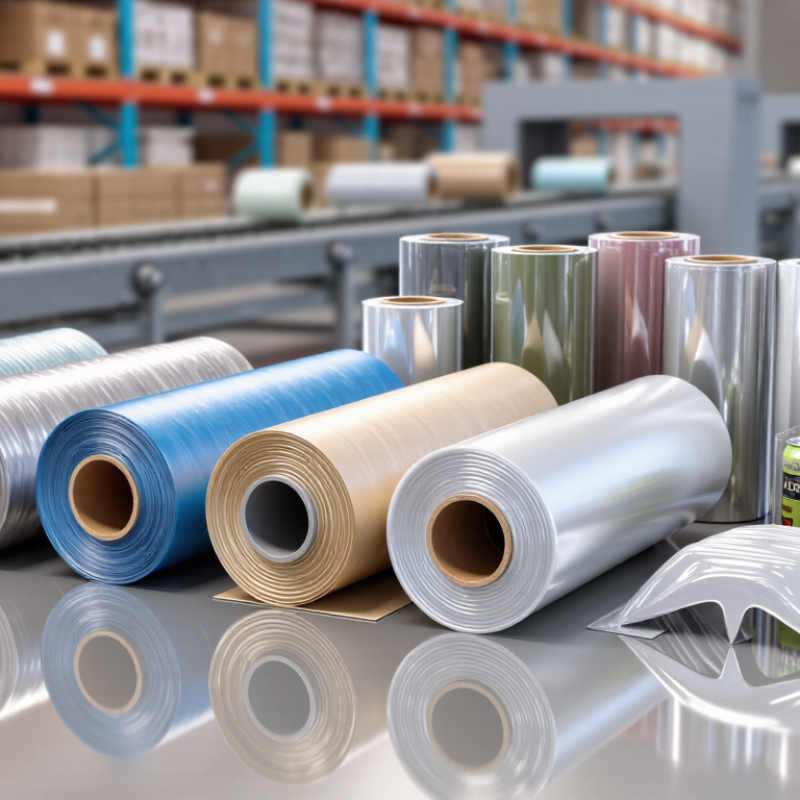
Shrink film is stretched during manufacture, then cooled while its polymer chains remain oriented. When heat reaches the film, those chains relax and pull the material tightly around a product. Heat does the work. A heat gun may suit a single package, while a tunnel handles steady production. Too much heat can cause holes, wrinkles, or distorted labels, so settings should match the film and package.
The main material types include PVC, polyolefin, and polyethylene films. Polyolefin is often chosen for clear retail packaging; polyethylene is thicker and more flexible, making it useful for bundling larger items. Cross-linked polyolefin adds strength and puncture resistance. Barrier film uses multiple layers to limit moisture or oxygen transfer. Other common forms include shrink tubing, bags, centerfold film, printed film, and perforated film. These ten labels do not describe ten separate resins: some identify composition, while others describe format or added function.
That distinction matters when comparing specifications. Film thickness, shrink ratio, sealing behavior, clarity, and required temperature all affect performance. A trial with the actual product can reveal problems that a data sheet may not show. The categories can blur, and that is worth remembering: a “type” is useful only when it helps match the film to the package and process.

Shrink films differ in clarity, stiffness, sealing behavior, and heat response. The OECD’s Global Plastics Outlook (2022) estimates packaging made up 31% of global plastic use in 2019. That figure covers all packaging, not shrink film alone, but shows why material selection matters. PVC offers clear presentation and strong shrink, though it needs careful temperature control. Polyolefin (POF) is clear, flexible, and suited to mixed product shapes. Polyethylene (PE) is tough and moisture-resistant; LDPE tends to seal easily, while LLDPE and HDPE grades offer different balances of stretch, strength, and stiffness. Trade-offs matter.
The remaining common types include polypropylene (PP), PETG, OPS, and PLA. PP is light and relatively stiff, but its shrink and sealing window can be less forgiving. PETG gives strong, even shrink and clear sleeve graphics. OPS is lightweight and can shrink at comparatively low temperatures, but is less robust in some handling conditions. PLA is bio-based and may suit specific composting systems; disposal claims depend on the film specification and available facilities. One weakness in this neat list: PE grades overlap, and suppliers may classify them differently. Test samples on the actual line. A film that looks perfect on a bench can wrinkle around a sharp corner.
Shrink films differ less by name than by how they balance toughness, transparency, and heat. Common choices include PVC, standard and cross-linked polyolefin, PE, LDPE, LLDPE, HDPE, PETG, OPS, and PLA. Some are related: LDPE, LLDPE, and HDPE are polyethylene grades, not wholly separate polymer families. That matters when comparing specifications.
Polyolefin usually offers clear presentation and good puncture resistance for retail packs.
Cross-linking can improve strength and handling, though it does not make every film suitable for every machine.
PE is often chosen for heavier bundles; its clarity can be lower, and it commonly needs stronger heat input than thinner retail films.
PVC can shrink tightly and look glossy, but its handling and processing conditions need care.
PETG sleeves deliver strong shrink and sharp graphics, while OPS can suit shaped containers but may be less forgiving.
PLA offers a bio-based option, yet heat sensitivity can complicate processing.
Watch the actual line. A film that looks crystal clear on a sample roll may wrinkle or haze on a fast tunnel.
Shrink temperature, dwell time, film thickness, and package shape all change the result.
I would test a real pack, not just a flat swatch. That distinction is easy to miss.
Shrink film choices make more sense when matched to the job. PVC film is often used for compact retail items, such as boxed cosmetics or small gift sets, where clear presentation matters. Polyolefin film suits food packs, toys, and household goods because it offers a flexible, clear wrap. For heavier loads, polyethylene shrink film commonly groups beverage cases, cans, or large cartons onto pallets.
Cross-linked polyolefin is used for products that need stronger seals and cleaner-looking bundles, including printed materials and multi-packs. Irradiated polyolefin is another option for demanding packaging lines, where added strength can help reduce film breaks. PETG shrink film is common on bottle sleeves and shaped containers; it conforms closely to curves. It can be tricky around sharp edges.
Perforated shrink film lets trapped air escape, making it useful for bulky or irregular items that might otherwise balloon during heating. Barrier shrink film is used for selected food packs where limiting oxygen or moisture exchange supports product protection. Printed shrink film carries product details or graphics on snack packs, beverages, and retail bundles. Shrink bundling film secures several items together for transport or shelf display. The right fit depends on product shape, heat sensitivity, equipment, and storage conditions. A suitable film can still wrinkle or tear if the settings are off. Packaging trials matter.
Common applications represented across 10 shrink-film types
How to read this chart: Values count the film types listed as commonly used in each application category; they do not represent market share or usage volume.
Types and typical uses: PVC—multipacks and tamper bands; polyolefin (POF)—retail multipacks; polyethylene (PE)—multipacks and pallet loads; cross-linked POF—retail packs and multipacks; PETG—full-body sleeves; OPS—shrink labels; PLA—shrink labels where suitable composting systems are available; polypropylene (PP)—shrink labels and sleeves; irradiated PE—heavy-duty bundling and pallet loads; VCI shrink film—corrosion protection for metal goods.
Choosing shrink film starts with the product and the packaging line, not a list of film names. Polyolefin often suits clear retail bundles; polyethylene is commonly used for heavier multipacks and larger loads. PVC, cross-linked films, and specialty options may fit other needs, but performance depends on gauge, sealing method, and machine settings. Fit matters most.
Plastics Europe’s Plastics – the Fast Facts 2023 reports that packaging represented 39% of European plastics-converter demand in 2022. That shows the scale of packaging use, not which film is right for your product. Check required clarity, puncture resistance, shrink ratio, and temperature range. Then run a small trial with real products, including sharp corners and full cases. Measure seal quality, wrinkles, breakage, and film use per pack. A thinner film may look efficient, but tears can create more waste. I would not choose by appearance alone. Line conditions can surprise you.
| Shrink Film Type | Material or Construction | Typical Characteristics | Common Applications | Best Fit and Selection Considerations |
|---|---|---|---|---|
| 1. General-purpose polyolefin (POF) | Usually a multilayer polyolefin film made from polyethylene and polypropylene components. | Clear, flexible, and commonly used for retail presentation; available in centerfold and single-wound formats. | Books, toys, cosmetics, food multipacks, and general retail products. | A versatile starting point for many consumer products. Confirm film gauge, package shape, sealing method, and compatibility with the shrink equipment. |
| 2. Cross-linked POF | Polyolefin film treated to create cross-links in its polymer structure. | Often offers improved toughness and resistance to punctures or tears compared with conventional POF of similar gauge; performance depends on the film specification. | Products with sharp edges, heavier retail packs, and applications requiring durable seals. | Consider when ordinary POF is prone to breakage. Test seal strength and shrink settings on the actual package. |
| 3. PVC shrink film | Polyvinyl chloride film formulated for shrink applications. | Can provide good clarity and strong shrink response. Heating and ventilation requirements should be assessed for the specific grade and process. | Certain non-food retail packs, tamper-evident bands, and specialty packaging where permitted and suitable. | Check local regulations, product contact requirements, and workplace handling guidance. It is less suitable where a PVC-free material is required. |
| 4. Polyethylene (PE) shrink film | A broad family of polyethylene shrink films, including different densities and formulations. | Generally suited to heavier or larger packages; commonly used in thicker gauges than films intended for small retail overwrap. | Beverage multipacks, cartons, building materials, and palletized or industrial products. | A practical option for bundling and transport protection. Select film strength and thickness based on pack weight, handling, and equipment capability. |
| 5. LDPE shrink film | Low-density polyethylene, a common material within the PE shrink-film family. | Typically flexible and used for robust bundling applications; exact strength and shrink behavior depend on grade and thickness. | Multipacks, cartons, household goods, and other larger packs. | Consider for larger packages where a durable PE-based wrap is needed. LDPE is a subtype of PE, not a separate material family. |
| 6. Co-extruded PE shrink film | PE film produced with multiple layers, which may be designed to balance sealing, strength, or other performance properties. | Layer structure and performance vary by product; may be specified for demanding bundling or packaging lines. | Heavy multipacks, industrial products, and applications requiring tailored film performance. | Ask the supplier for the layer design, sealing guidance, and applicable performance data. This is a construction type within the PE family. |
| 7. PETG shrink film | Glycol-modified polyethylene terephthalate, often supplied as a printable shrink-sleeve substrate. | Can achieve high shrink for conforming sleeves around shaped containers; processing and recycling compatibility depend on the package design and local systems. | Full-body labels and sleeves for bottles, jars, and other contoured containers. | Choose for complex container shapes and broad sleeve coverage. Check shrink profile, application equipment, and whether the sleeve affects container recycling. |
| 8. OPS shrink film | Oriented polystyrene film commonly used for shrink labels and sleeves. | Often selected for lightweight, conformable sleeves; handling and shrink performance depend on grade and converting conditions. | Printed sleeves and labels for beverage, personal-care, and household-product containers. | Evaluate for sleeve applications where its material and processing profile suit the container. Confirm availability, line compatibility, and end-of-life requirements. |
| 9. PLA shrink film | Film made from polylactic acid, a bio-based polymer; “bio-based” does not by itself mean home-compostable or recyclable in local systems. | May be used for shrink labels and sleeves; heat tolerance, shrink behavior, and disposal options depend on the specific grade and infrastructure. | Selected labels, sleeves, and packaging projects seeking a bio-based material option. | Verify certified claims, processing conditions, and local collection or composting facilities before making environmental claims. |
| 10. Micro-perforated shrink film | Shrink film, often PE or POF, with small perforations that allow air to escape during shrinking. | Perforation pattern and size affect venting, appearance, and package protection; the base polymer determines many other film properties. | Bulky packs, grouped products, and packages where trapped air can cause poor shrink results. | Useful when venting is needed, but perforations can reduce barrier protection. Choose the base film and perforation pattern for the product and process. |
Selection note: Shrink performance varies by formulation, film thickness, package geometry, sealing method, and equipment settings. Validate the chosen film with production trials and check applicable food-contact, labeling, and recycling requirements.

