

China has become an important source of packaging equipment, including Chocolate Wrapping Machinery for bars, pralines, and other confectionery products. Yet choosing a supplier is not simply a matter of comparing catalog prices. Chocolate behaves differently across seasons and production rooms. A wrapper that runs smoothly with firm bars may struggle with delicate fillings, changing temperatures, or glossy films.
This guide to Top Chocolate Wrapping Machinery Manufacturers in China looks at the details that matter on a real production line. These include wrapping speed, product-size changeover, film compatibility, sealing consistency, machine footprint, and access to spare parts. Ask for demonstrations using products and packaging materials similar to your own. A polished video is useful, but it cannot answer every question. Request technical specifications, sample packs, and clear service terms before making a decision.
There is no universal best machine. A small confectionery business may value simple adjustments and operator training, while a high-volume factory may prioritize line integration and stable output. Buyers should also check how manufacturers handle installation, troubleshooting, and routine maintenance. These points can reveal more than a headline speed. Some specifications may look impressive on paper. Verify them.
The manufacturers featured in this article are starting points for research, not automatic endorsements. Compare each company’s experience, documented capabilities, and communication quality against your actual needs. Even careful research leaves room for uncertainty. A factory visit or product trial, when practical, can expose details that a brochure misses. That extra step is rarely wasted.
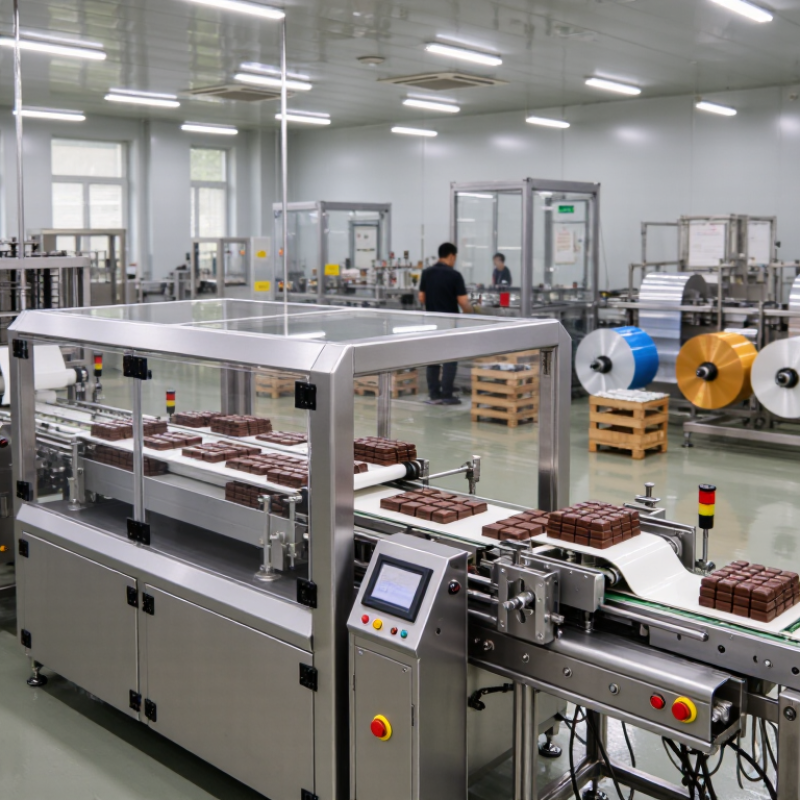
In China, chocolate wrapping machinery covers more than a single wrapping machine. The market includes equipment for individual pralines, molded bars, small bites, and multipacks. A production line may combine product feeding, primary wrapping, inspection, and cartoning. The right configuration depends on the chocolate’s shape, size, surface finish, and expected output. Small details matter.
Common systems include fold-wrapping machines for pieces and flow wrappers for bars or grouped products. Some lines use foil, paper, or laminated packaging materials, subject to the product and packaging specification. Cartoners can add a retail-ready outer pack, while conveyors connect machines and help manage product flow. Compatibility deserves close attention: a wrapper’s rated speed does not guarantee the same output across an entire line.
For practical evaluation, buyers can check changeover time, sealing consistency, material waste, cleaning access, and the handling of fragile or heat-sensitive chocolate. Ask for trials using the actual product and packaging material, then review sample packs and operating data. There is no perfect setup. Faster equipment may need more careful feeding, and frequent format changes can reduce real production time. That trade-off is easy to underestimate.

Main Types of Chocolate Wrapping Machines
Chocolate wrapping machines are usually selected by product shape, wrapper material, and required output. Horizontal flow wrappers seal bars in a continuous film tube, creating tight packs with neat end seals. They suit standard bars and multipacks. Twist wrappers fold paper or foil around individual pieces, leaving twisted ends. These work well for small, solid chocolates. Small pieces need consistent feeding.
Foil-folding machines wrap pieces with foil, then fold edges around the product. They are common for molded chocolates and premium-style portions. For square or pillow-shaped pieces, folding and envelope-style machines create crisp corners, though setup can be sensitive to product dimensions. Cartoning equipment is often added downstream; it groups wrapped pieces into retail boxes rather than wrapping each chocolate itself.
The Fortune Business Insights Chocolate Market report estimated the global chocolate market at USD 119.39 billion in 2023. That figure describes the wider chocolate market, not wrapping-machine sales, but it shows the scale of products these lines may serve. In practice, buyers should test actual pieces and wrapper stock at operating speed. A beautiful sample pack can still wrinkle after several hours. Machine categories also overlap, so the product trial matters more than the label.
When evaluating Chinese chocolate wrapping machinery manufacturers, inspect performance under your product’s real conditions. Ask for a factory acceptance test using your chocolate size, wrapper material, and target speed. Watch for cracked edges, loose seals, and frequent stoppages. Grand View Research estimated the global packaging machinery market at USD 45.96 billion in 2023, with projected annual growth of 4.7% from 2024 to 2030. This signals a growing market, not proof that any supplier meets your needs.
Compare measurable evidence, not presentation alone. Request documented output rates, changeover times, reject rates, and film consumption from comparable installations. Check whether electrical drawings, operating manuals, and spare-parts lists are complete and available in usable English. Ask how quickly technicians respond, and confirm which wear parts are stocked locally. A polished sample can hide weak service support. No checklist catches everything; I would also ask to speak with a recent customer, with permission.
Tip: Bring your own product samples to testing. Record results over a sustained run, not just a brief demonstration. Agree on acceptance criteria in writing, including speed, seal quality, and changeover time. The test may feel repetitive, but that is useful.
China’s chocolate wrapping machinery sector includes manufacturers serving small confectionery workshops and high-volume production lines. Equipment may handle twist wrapping, fold wrapping, flow wrapping, or carton loading, depending on the product format. A good machine protects appearance as well as output. Thin foil can wrinkle. Heat-sensitive chocolate can soften near poorly controlled sealing zones.
Notable manufacturers are often distinguished by engineering depth, rather than catalog size. Look for clear specifications on wrapping speed, product size range, changeover time, and compatible packaging materials. Ask for a live trial using your actual chocolate pieces and wrapper stock. Watch the feed track, film tension, and reject handling. Small details matter. A stable machine should produce neat seams without frequent manual adjustment.
Service deserves equal attention. Request installation plans, operator training, spare-parts lists, and realistic response times. Review electrical drawings and cleaning access before ordering. A polished showroom demonstration is useful, but it cannot prove months of reliable production. This checklist is not perfect; factory layout and seasonal demand can change the best choice. Compare documented test results, not broad promises, and confirm requirements in writing.
| Machinery Category | Typical Wrapping Format | Common Chocolate Products | Main Machine Operations | Common Packaging Materials | Typical Line Integration |
|---|---|---|---|---|---|
| Flow-wrap packaging machines | Horizontal pillow-pack wrapping with sealed ends | Chocolate bars, wafers, biscuits coated in chocolate, and individual confectionery pieces | Product feeding, film forming, longitudinal sealing, and end sealing | Heat-sealable flexible films, including suitable laminated or coated packaging films | Often connected to product feeders, weighing systems, conveyors, and date-coding equipment |
| Foil-fold wrapping machines | Folded foil or inner-wrap packaging, sometimes with an outer paper layer | Chocolate tablets, pralines, and selected molded chocolate pieces | Product positioning, wrapping-material folding, and package shaping | Aluminium foil, paper, or compatible foil-and-paper combinations | May operate with automatic feeding, product orientation, and downstream cartoning equipment |
| Twist-wrapping machines | One- or two-end twist wrap | Small, individually wrapped chocolates and confectionery pieces designed for twist wrapping | Piece feeding, wrapper placement, and twisting at one or both ends | Twist-compatible paper, film, or laminated wrapper stock | Can be paired with counting, collection, and bagging or carton-packing equipment |
| Cut-and-wrap machines | Folded wrap around individually presented pieces | Caramels, chocolate-coated candies, and other confectionery products with suitable shapes | Product feeding, wrapper cutting, folding, and package closure | Paper-based or flexible wrapping materials compatible with the machine format | Typically placed after product forming or cooling and before collection or secondary packing |
| Chocolate bar wrapping systems | Primary wrap configured for individual bars, including flow-wrap or folded-wrap formats | Solid chocolate bars and filled or layered bars | Bar infeed, spacing, wrapping, sealing or folding, and pack discharge | Flexible heat-sealable film, paper, foil, or format-specific material combinations | May be integrated with bar cooling, inspection, checkweighing, coding, and cartoning stages |
| Cartoning and secondary packaging machines | Carton loading around wrapped chocolates or grouped products | Assorted chocolates, boxed pralines, and multipacks of wrapped bars | Carton forming, product grouping, loading, and carton closing | Folding carton board and, where specified, inserts or trays | Commonly follows primary wrapping and may feed case packing or end-of-line handling |
Note: This table summarizes common equipment categories and packaging applications, not a ranking of individual suppliers. Actual machine speeds, materials, and configurations depend on product dimensions, wrapper specifications, and line requirements.
When comparing Chinese chocolate-wrapping machinery manufacturers, assess technology, real production capacity, and service support together. MarketsandMarkets’ 2023 Packaging Machinery Market report valued the global market at USD 45.8 billion and projected USD 58.9 billion by 2028. This broad market estimate signals investment in automation, but it does not prove any supplier’s line performance.
Look for servo-driven film feeding, recipe storage, and quick adjustment for different chocolate sizes. Ask manufacturers to demonstrate your actual product and wrapper, not just an empty machine. Compare sustained output, changeover time, film waste, and rejection rates; headline speed alone can mislead. A machine rated for 800 pieces per minute may run slower with delicate shapes or frequent size changes. Service matters too. Check spare-parts availability, remote diagnostics, technician response times, and operator training. Small details count.
Tips: Request a factory acceptance test using your product, then record output and stoppages over a full shift. Get service commitments in writing. One caveat: test conditions may not reflect daily production, so leave room for uncertainty.

