

Who Are the Top Thermal POS Paper Manufacturers in China?

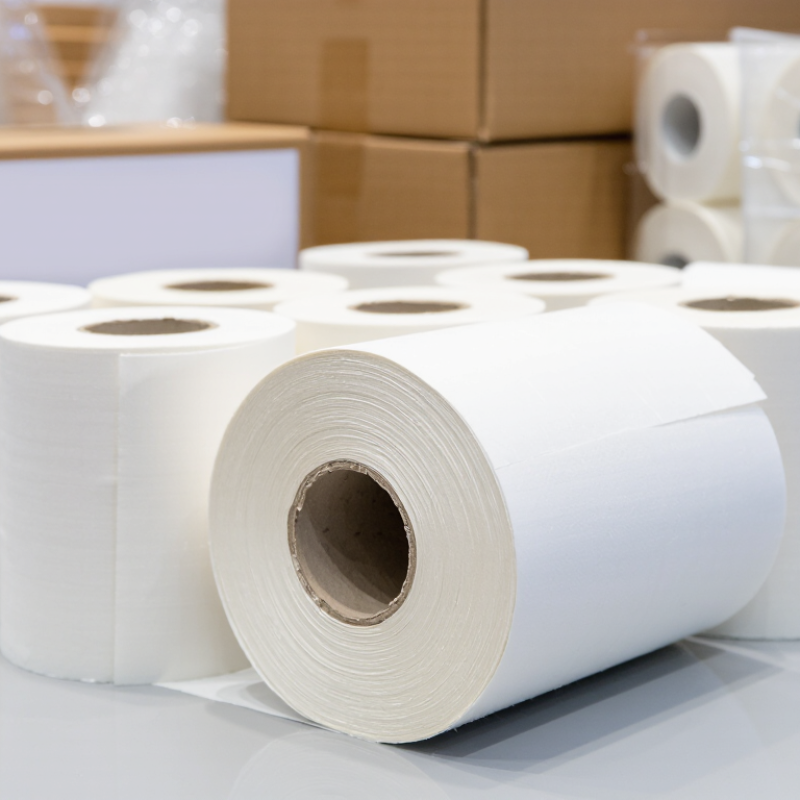
Thermal Pos Paper may look like a simple white roll, but its performance is shaped by coating quality, paper weight, winding precision, and storage conditions. A faint print, dusty cutter, or uneven roll edge can disrupt a busy checkout. Small details matter.

Grand View Research estimated the global thermal paper market at approximately USD 4.43 billion in 2023 and projected a 6.5% compound annual growth rate from 2024 to 2030. This market estimate provides useful context, but it does not rank Chinese manufacturers or verify their factory capabilities. Buyers still need to examine product samples, production consistency, certifications, and traceability records. They should also confirm whether material declarations match their destination-market requirements.

This guide compares leading Chinese manufacturers through practical sourcing criteria: coating uniformity, roll dimensions, print clarity, packaging, and export experience. It also considers how suppliers respond when a sample performs differently from a production batch. That can happen.

A named expert quotation should be checked against a published interview or attributable source. No such source was provided for this topic, so this introduction does not invent an expert or quote. Verifiable evidence is more useful than a polished attribution.
Who Are the Top Thermal POS Paper Manufacturers in China?

Understanding Thermal POS Paper and Its Main Applications

Thermal POS paper is a heat-sensitive paper used to print receipts without ink ribbons. A thermal print head warms selected spots on its coated surface, forming text and simple graphics. No ink is needed. This makes printing quick and keeps routine maintenance relatively simple. In a busy grocery checkout, a clear receipt can emerge within seconds, even during a steady stream of transactions. Restaurants, parking kiosks, pharmacies, and ticket counters also use thermal rolls where compact printers and fast service matter.

The right roll must match the printer’s width, diameter, and core size; a mismatch can cause jams or poor feeding. Buyers should also check paper weight, coating consistency, and print darkness on the equipment they actually use. A specification sheet helps, but a short trial run often reveals details that numbers miss. Receipt legibility matters. Heat, sunlight, and friction can affect how long printed information remains readable, so storage conditions deserve attention too. Some buyers focus only on price, though that can be a false economy if weak coating leads to faded text or frequent roll changes. Thermal paper is convenient, but it is not maintenance-free.

How China’s Thermal POS Paper Manufacturing Industry Works

China’s thermal POS paper industry is a connected production chain, not just a coating line. Mills make the base paper, while specialist converters apply heat-sensitive coatings, slit jumbo rolls, and package finished rolls for cash registers and kiosks. Coating uniformity matters: uneven layers can leave pale print, dark patches, or unreadable receipts. Slitting also needs tight control, since rough edges can jam printers. Small details matter.

The global context is growing. Grand View Research valued the thermal paper market at about USD 4.3 billion in 2023 and projected a 6.4% compound annual growth rate from 2024 to 2030. This is a global estimate, not a measure of China’s POS-paper output. The China Paper Association reported 127.05 million tonnes of total paper and paperboard production in 2023, showing the scale of the wider supply base, not thermal grades alone. Not every roll behaves. Humidity, storage time, coating chemistry, and printer settings can all affect image quality. Factory checks therefore typically include coating weight, roll dimensions, print density, and winding tension. The process looks standardized on paper; real batches still need careful adjustment.

Common Thermal POS Paper Roll Widths

Thermal POS rolls are commonly sold in nominal widths of 57 mm and 80 mm. The required size depends on the receipt printer or terminal.

Key Criteria for Evaluating Chinese Manufacturers

When evaluating Chinese thermal POS paper manufacturers, look beyond quoted price. Ask for the paper’s base-weight range, roll-width tolerances, core dimensions, and coating options. These details affect printer compatibility and reduce jams at busy checkout counters. Details matter.

Request samples from more than one production batch. Check print darkness, image clarity, and resistance to rubbing after printing. A simple test with your own POS printers can reveal issues that a specification sheet may miss. Keep the test conditions consistent, including printer settings and storage time.

Reliable manufacturers should explain how they inspect incoming paper, coating uniformity, winding tension, and finished rolls. Ask for inspection records and batch identification so problems can be traced to a shipment. Also compare stated monthly capacity with lead times and your order pattern. A large capacity figure alone says little about consistency. I would not treat one good sample as proof; repeat tests are more convincing, though they take extra time. Clear answers about rejected rolls, replacement procedures, and production changes help assess how a supplier handles ordinary setbacks.

Who Are the Top Thermal POS Paper Manufacturers in China? - Key Criteria for Evaluating Chinese Manufacturers

Evaluation Criterion What to Check Useful Evidence Why It Matters
Paper specifications Confirm roll width, roll length, core dimensions, paper grade, basis weight, and thickness against the intended printer and order specification. A written product specification, sample rolls, and inspection records that use the same units and tolerances as the purchase agreement. Incorrect dimensions or inconsistent paper properties can cause printer-feed issues, roll changes, or differences between batches.
Print performance Test legibility, image density, print uniformity, and resistance to smudging on the intended POS printer settings. Sample-print results from the buyer’s printer model, assessed under documented conditions. Thermal printing depends on both the paper coating and the printer’s heat settings, so samples should be tested in the intended application.
Image stability Review the supplier’s stated image-storage conditions and test how printed receipts respond to heat, light, humidity, oils, and handling relevant to their use. A technical data sheet stating storage guidance, plus test reports that identify the test method and conditions. Thermal images can fade or change with exposure. Storage and handling conditions affect how long information remains readable.
Coating and chemical documentation Request disclosure of relevant coating substances and confirm compliance with the rules applicable in the destination market. Current declarations, safety documentation where applicable, and third-party test reports identifying the tested sample and method. Chemical restrictions and documentation requirements vary by market. A certificate or declaration should be checked for scope, date, and product coverage.
Quality management Check whether the manufacturer has documented controls for incoming materials, production, inspection, nonconforming goods, and corrective actions. Relevant audit records, process descriptions, and valid management-system certificates where claimed. Verify the certificate’s scope and issuing body. A quality-management certificate relates to the management system within its stated scope; it does not by itself prove that every paper roll meets the buyer’s specifications.
Batch consistency and traceability Ask how batches are identified and how the supplier handles retained samples, inspection records, and complaints. Batch labels, inspection reports linked to production lots, and a documented complaint-resolution process. Traceability helps buyers investigate defects and compare the supplied goods with approved samples and purchase requirements.
Production capacity and lead time Confirm available production capacity, order lead time, peak-season planning, and the process for notifying buyers about delays or specification changes. A production schedule, order-specific delivery plan, and clear written terms for changes and delays. Capacity and delivery performance should be assessed against the buyer’s order size and replenishment schedule, rather than assumed from a supplier’s general claims.
Packaging and transport protection Review roll wrapping, carton strength, moisture protection, labeling, and suitability for the planned shipping and storage conditions. Packaging samples, carton specifications, and inspection of a shipment or pre-shipment sample. Appropriate packaging helps protect rolls from moisture, dust, and physical damage during storage and transport.
Environmental and sourcing claims For claims such as recycled content or certified sourcing, check the precise claim, product coverage, and chain-of-custody evidence. Current, independently verifiable certificates or documentation that covers the specific product and supply chain. Environmental claims can apply to particular materials, sites, or product ranges; verify that the evidence matches the goods being purchased.
Commercial terms and after-sales support Clarify minimum order quantities, sample policy, payment terms, tolerances, claims window, and remedies for nonconforming goods. A detailed quotation and purchase agreement stating specifications, inspection criteria, delivery terms, and complaint procedures. Clear terms make supplier comparisons more consistent and reduce ambiguity if delivered goods differ from agreed requirements.

Leading Thermal POS Paper Manufacturers in China

Leading thermal POS paper manufacturers in China compete on more than roll price. Buyers should check coating uniformity, paper brightness, roll-edge quality, and batch traceability. In store use, a receipt must print darkly without leaving residue on the printer head. Rolls should also unwind smoothly, with consistent width and core fit. Small details matter.

Fortune Business Insights estimated the global thermal paper market at about USD 4.2 billion in 2023, forecasting roughly USD 6.1 billion by 2032. This is a broad market estimate, not a China-specific POS ranking. That distinction matters. For supplier comparisons, request samples from multiple production batches and test print density, curling, and image retention under heat and light. Ask for documented specifications and quality-control records, then compare results against the intended printer and storage conditions. A polished sample is useful, but it cannot reveal every production variation. I would treat claims of “premium quality” cautiously unless the supplier can show repeatable test results.

How to Compare Manufacturers and Choose a Supplier

When comparing thermal POS paper manufacturers in China, request samples made to your exact roll width, length, core diameter, and paper weight. Check each roll on the printer you actually use. Look for dark, even text, clean edges, low paper dust, and smooth feeding. Small defects matter. A faint receipt or curled edge can slow a busy checkout. Ask about coating uniformity, storage conditions, and batch inspection records. A specification sheet is useful, but it does not replace testing.

Compare suppliers on consistency, not only price. Request samples from more than one production batch, then check print quality after storing them in a warm, dry place. Ask how the factory controls winding tension and protects rolls from moisture during shipping. Clarify minimum order quantities, lead times, packing details, and how complaints are investigated. Response quality tells you something. A supplier that answers technical questions clearly may be easier to work with, though polished emails are no guarantee. I would also record test results in a simple table; it feels tedious, but memory is unreliable.

You've just added this product to the cart:

0
    0
    Your Cart
    Your cart is empty