

What Are the Top Walnut Food Products for Buyers?

Walnut Food products range from raw kernels and roasted snacks to walnut butter, oil, flour, and bakery ingredients. For buyers, the best choice depends on more than flavor. Kernel size, freshness, processing method, packaging, and intended use all affect value. A pale, crisp kernel may suit retail snack packs, while smaller pieces can work well in granola, pastries, or food-service blends. Simple distinctions matter.

Industry data helps explain the supply side. The USDA Foreign Agricultural Service’s Tree Nuts: World Markets and Trade reports track walnut production, trade, and major exporting regions. The International Nut and Dried Fruit Council’s Statistical Yearbook also provides production and market context across nut categories. These sources are useful for understanding availability and sourcing trends, but they do not rank individual retail products. Buyers should still compare current supplier specifications, harvest details, and quality documentation.

This guide examines the leading walnut product types and the practical trade-offs behind them. It considers convenience, versatility, processing, and storage—not just price per kilogram. A buyer selecting walnut oil needs different evidence from a snack brand choosing roasted halves. Labels can look reassuring, yet they do not tell the whole story. Ask about origin, lot traceability, and how products are stored before shipment. The category is not perfectly tidy: grades and descriptions can vary between suppliers. A sample often reveals what a specification sheet misses.
What Are the Top Walnut Food Products for Buyers?

Walnut Product Categories and Their Key Forms

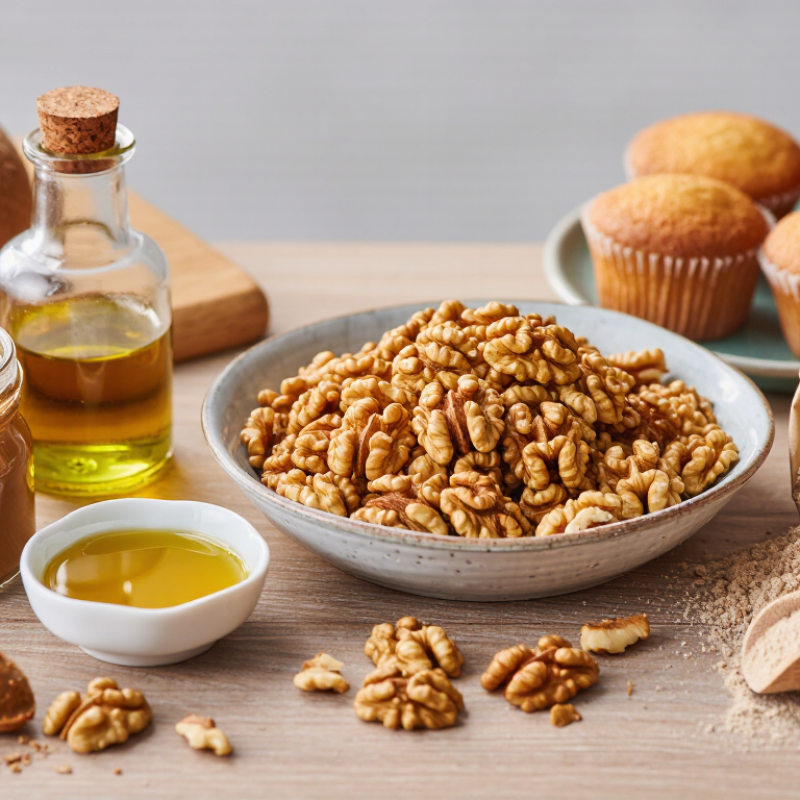
Walnut products usually fall into a few practical categories. In-shell walnuts suit buyers who want longer storage and a cracking experience. Shelled kernels are more convenient for kitchens and food production. They may be sold as whole halves, quarters, or small pieces. Halves look attractive on baked goods, while pieces mix easily into granola, salads, and dough. Small details matter. Ask about harvest date, moisture control, and storage conditions, since walnuts can develop stale or bitter flavors when poorly stored. A clean sample should smell mild and nutty, not oily or sharp.

Processing creates more options. Raw kernels retain a soft bite; roasted kernels offer a deeper aroma and crisp texture. Walnut oil works well in dressings, though heat can dull its delicate flavor. Walnut flour adds nutty taste to baking, but its low gluten content may change a recipe’s texture. Pastes and chopped blends can suit fillings, sauces, or spreads. Buyers should compare ingredient lists and request samples before choosing a format. A tidy category chart can hide meaningful differences in size, freshness, and use. Appearance helps, but it is not a reliable freshness test by itself.

Raw and Roasted Walnuts: Uses and Differences

What Are the Top Walnut Food Products for Buyers?
Raw and Roasted Walnuts: Uses and Differences

Raw walnuts have a mild, slightly earthy taste and a tender bite. Their subtle flavor works well in salads, oatmeal, baked goods, and sauces. Chop them into a carrot salad, or blend them with herbs for a creamy, savory spread. Raw walnuts can soften quickly in moist dishes, so add them just before serving when texture matters. Keep them cool.

Roasted walnuts develop a deeper aroma and a firmer crunch. Gentle roasting can bring out buttery, toasted notes that pair well with vegetables, grains, and desserts. Try them over roasted squash or stir them into warm rice after cooking. Watch the timing: nuts can turn bitter if left in a hot oven too long. That matters.

For buyers, the best choice depends on the product’s intended use. Raw walnuts suit recipes where a mild taste or later cooking is expected; roasted walnuts offer ready-to-eat flavor and crunch. Check for a fresh, clean aroma and pieces without excessive dust or broken fragments. “Raw” can describe an unroasted product, but handling may differ between suppliers. It is worth asking how the walnuts are processed and stored, especially when consistent flavor matters. Neither option is automatically better; the recipe often decides.

What Are the Top Walnut Food Products for Buyers? - Raw and Roasted Walnuts: Uses and Differences

Walnut product Processing and form Typical uses Flavor and texture What buyers should check
Raw walnut halves Shelled kernels sold whole or as halves; not roasted. Snacking, baking, salads, oatmeal, and cheese boards. Mild, earthy flavor with a tender, slightly crisp bite. Look for intact pieces, a fresh aroma, and packaging that protects against moisture and light.
Raw walnut pieces Shelled walnuts broken or cut into smaller pieces. Bread, muffins, cookies, granola, salads, and toppings. Similar to raw halves; smaller pieces distribute easily through recipes. Check the stated piece size and the proportion of fine crumbs, especially for commercial baking.
Dry-roasted walnuts Walnuts heated without added cooking oil; may be sold whole, halved, or in pieces. Ready-to-eat snacks, salad toppings, savory dishes, and baking. More pronounced toasted aroma and flavor; typically firmer and crunchier than raw walnuts. Confirm whether the product is unsalted, and review the ingredient list for added oil or seasonings.
Salted or seasoned roasted walnuts Roasted kernels with salt and, in seasoned varieties, additional flavorings. Packaged snacking, party mixes, and savory snack assortments. Toasted and savory; seasoning can mask some of the walnut’s natural flavor. Compare sodium levels and ingredients; consider whether the seasoning suits the intended market.
Chopped or diced walnuts Raw or roasted kernels cut into small, relatively uniform pieces. Confectionery, bakery toppings, fillings, cereals, and prepared foods. Provides walnut flavor and texture in smaller, more evenly distributed portions. Check cut size, consistency, and whether the walnuts are raw or roasted.
Ground walnuts or walnut meal Walnuts milled into a coarse meal or finer ground form; products may vary in particle size. Cake and cookie recipes, crusts, fillings, coatings, and sauces. Adds a nutty flavor and moist, tender texture; finer grinding can release more walnut oil. Check particle size, ingredient composition, and handling guidance to help prevent clumping or rancid flavors.
Walnut butter or walnut paste Ground walnuts processed into a spreadable paste; some products include added ingredients. Spreads, sauces, dips, fillings, and smoothies. Rich and creamy, with a concentrated walnut flavor. Review the ingredient list, texture, and storage instructions; oil separation can occur in products without stabilizers.
Walnut oil Oil extracted from walnuts; flavor and processing depend on the product. Dressings, dips, finishing, and selected recipes. A smooth oil with a characteristic nutty flavor, especially in less-refined varieties. Check the intended cooking use and storage directions; walnut oil is sensitive to heat and oxidation.

Raw vs. roasted: Raw walnuts have a milder flavor and are versatile in recipes. Roasting develops a deeper toasted aroma and a crunchier texture. Both are useful in snacks and cooking; choose based on the desired flavor, texture, and ingredient requirements. Walnuts are tree nuts and should be identified as an allergen where required.

Walnut Oils, Flours, Butters, and Other Value-Added Foods

Walnut value-added foods give buyers more than one route to market. Oils suit dressings and finishing; flour adds a mild, earthy note to baking blends. Butters work in spreads, fillings, and sauces. Texture matters. A fine flour behaves differently from a coarser meal, especially in delicate cakes. Buyers should check particle size, roast level, ingredient lists, and packaging that limits light and air. Walnut oil can lose freshness if stored poorly, so ask about pressing dates and storage conditions.

The USDA Foreign Agricultural Service’s 2024 Tree Nuts: World Markets and Trade report estimated global walnut production at about 2.7 million metric tons, on an in-shell basis. That broad supply supports diverse processing, but it does not guarantee uniform quality between lots. USDA FoodData Central lists raw walnuts at about 654 calories and 65 grams of fat per 100 grams.

These figures describe kernels, not finished flour, butter, or oil; processing changes the final profile. Keep that distinction. A buyer comparing products should request a current specification sheet and sample, then test the product in its intended recipe. Still, paperwork cannot reveal every flavor difference. A small batch test is worth the extra step.

How Buyers Compare Quality, Origin, and Processing

What Are the Top Walnut Food Products for Buyers?

Buyers comparing walnut products should separate kernel quality from origin claims. USDA FoodData Central lists raw English walnuts at about 654 calories, 15.2 grams of protein, and 6.7 grams of fiber per 100 grams. That is a useful nutrition baseline, not a freshness score. Ask suppliers for harvest year, cultivar, growing region, lot identification, and a recent certificate of analysis. Origin can help explain variety and harvest timing, but it does not guarantee better flavor.

The USDA Agricultural Marketing Service’s walnut grade standards assess factors such as kernel color and defects. Compare whole halves, pieces, and meal against their intended use: intact halves suit retail packs, while smaller pieces work well in bakery mixes. Check aroma and taste, too. Roasting changes flavor, and chopped kernels expose more surface to air during storage. I would not reject every darker kernel; variety and processing can affect color. Still, define acceptable color and defect limits before ordering.

Tips: Request a sample from the actual production lot. Taste it, inspect the package seal, and confirm storage conditions. A tidy sample is not enough; consistency across lots matters.

Choosing Walnut Products by Intended Use and Storage Needs

Choose walnut products by how quickly you will use them. Whole kernels suit baking, sauces, and everyday snacking; halves look neat on salads, while pieces are convenient for granola and toppings. Walnut flour works for recipes needing a finer texture, but its smaller particles are less convenient to store for long periods. Buy the format that matches your kitchen routine, not just the lowest price per kilogram. Small packs help. USDA FoodData Central reports about 65.2 grams of fat per 100 grams of raw English walnuts, so protecting them from heat, light, and air matters.

Check the package for a clear best-before date and intact sealing. At home, transfer opened walnuts to an airtight container and keep them cool and dry; refrigeration or freezing can help preserve quality, especially for chopped kernels. UC Davis Postharvest Research and Extension Center identifies about 0°C as an optimal storage temperature for walnuts. A refrigerator is not always that cold, and household conditions vary, so this is a guide rather than a guarantee. If you notice a paint-like smell or bitter taste, the nuts may have turned rancid. For occasional use, a smaller pack may be wiser, even if the price per kilogram is higher.

Choosing Walnut Products by Intended Use and Storage Needs

Whole kernels suit snacks and recipes where appearance matters; chopped walnuts are convenient for baking and toppings, while walnut meal works well in batters and coatings. The chart gives approximate refrigerated best-quality windows—not food-safety guarantees. Actual quality depends on freshness, packaging, and storage conditions; keep walnuts sealed and discard any that smell rancid.

You've just added this product to the cart:

0
    0
    Your Cart
    Your cart is empty