What Is a Recyclable Packaging Bag?
A Recyclable packaging bag is designed to enter a recovery stream and become useful material again, rather than simply carry a product once. That sounds simple. The details are not. A bag’s resin, inks, adhesives, barriers, and closures can affect whether it is accepted and processed. A package marked recyclable may still have no practical route in a shopper’s community.
The scale of the challenge is clear. The OECD’s Global Plastics Outlook reports that the world generated 353 million tonnes of plastic waste in 2019; only 9% was ultimately recycled. This figure covers plastics broadly, not packaging bags alone, but it shows why design and collection both matter. A bag cannot be judged by its material label alone. Ask what it is made from, whether its layers can be separated, and where local collection guidance directs consumers.
Dame Ellen MacArthur, founder of the Ellen MacArthur Foundation, has championed the circular-economy principle to “keep products and materials in use.” Applied to packaging, that principle asks designers to consider the bag’s next life before choosing its structure. For manufacturers, recyclability needs to be tested against real sorting and reprocessing conditions, not just a product specification. For buyers, clear instructions matter. A clean, dry film bag may look recyclable, yet local rules can differ. That gap deserves more attention. This guide explains what recyclable packaging bags are, how their materials and designs affect recovery, and which questions to ask before making a claim.
What Is a Recyclable Packaging Bag?
A recyclable packaging bag is designed to be collected and processed into material for a new product instead of being discarded. Its actual recyclability depends on the bag’s material and the facilities available in a particular area. Some programs accept clean plastic film, while others do not. Check local collection instructions before placing a bag in a recycling bin.
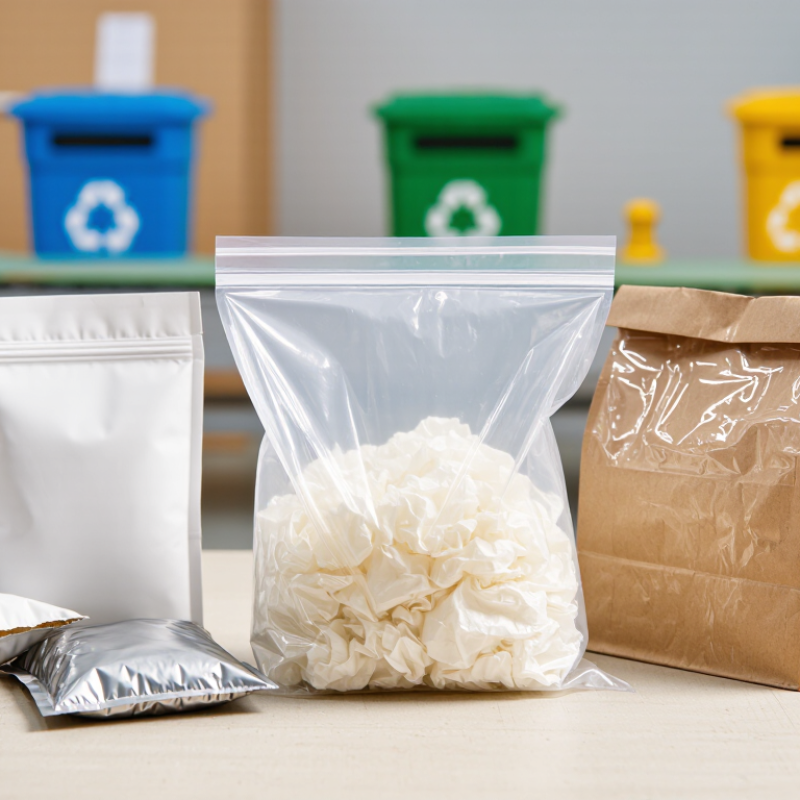
Many bags look similar but contain different materials. A plain, single-layer bag may be easier to process than one made from bonded layers, foil, or mixed plastics. These combinations can make separation difficult. That matters. A recycling symbol or a recyclable claim does not guarantee that a nearby facility accepts the item.
At home, keep accepted bags clean and dry, and remove labels or residue when local guidance requests it. Do not put soft film into curbside bins unless the program specifically allows it; loose film can interfere with sorting equipment. Store suitable bags together until you can take them to an approved collection point. It is a small habit, though not always convenient. Packaging design still has room to improve, and clearer material information would make everyday sorting less confusing.
Materials Commonly Used in Recyclable Packaging Bags
What Is a Recyclable Packaging Bag?
Materials Commonly Used in Recyclable Packaging Bags
Recyclable packaging bags are made from materials that can be collected and processed into new products. Paper is a familiar option. Kraft paper bags can work well for dry goods, though grease, wet food, and plastic linings may complicate recycling. A damp paper bag can lose strength quickly. That detail matters.
Plastic bags may use polyethylene (PE) or polypropylene (PP). Some recycling systems accept clean, single-material bags, while others do not collect them at all. Acceptance depends on local facilities, so a recycling symbol alone is not a guarantee. PET is also used in some flexible packaging, but mixed layers can be difficult to separate. Thin films, inks, zippers, and adhesive labels may affect how a bag is sorted or processed.
Tips: Check local recycling instructions before disposal. Empty the bag, keep it clean and dry, and separate removable parts when practical. Small details can change the outcome.
How to Identify and Prepare a Bag for Recycling
What Is a Recyclable Packaging Bag?
A packaging bag is recyclable only where local facilities accept its material. A recycling symbol or resin code can offer a clue, but it does not guarantee curbside collection. Many thin plastic films, including some mailers and produce bags, need a separate drop-off program. Looks can mislead.
Check the bag for a material label, then compare it with your local recycling instructions. Codes 2 and 4 are common on flexible plastic packaging, but acceptance varies by area. Empty the bag completely. Shake out crumbs, remove paper labels when easy, and make sure the material is clean and dry. Keep it dry. A greasy or food-covered bag may contaminate other items, so check local guidance before recycling it.
If your curbside program does not accept plastic film, look for a designated collection point that lists bags or flexible packaging. Do not put film in a recycling bin just because it feels recyclable; loose film can interfere with sorting equipment. And avoid stuffing bags inside one another unless the collection instructions allow it. The details can be frustratingly specific. I might expect two similar-looking bags to follow the same route, but their layers or coatings can change how they are handled.
Benefits and Limitations of Recyclable Packaging Bags
What Is a Recyclable Packaging Bag?
Benefits and Limitations of Recyclable Packaging Bags
A recyclable packaging bag is designed to be collected and processed into material for new products. Some use one main plastic type, which can be easier to sort than mixed-material packaging. Paper bags may also be recyclable when they are clean and uncoated. In practice, recyclability depends on local collection and processing systems. The label alone does not guarantee a bag will be recycled.
These bags can reduce demand for virgin materials when recycling works well. A dry, empty bag is more likely to be accepted than one stained with oil or food. Less material variety can also make sorting simpler. Yet flexible bags often tangle in sorting equipment or slip through screens. Many collection programs do not accept them, even when their material is technically recyclable. That gap is easy to miss.
Design brings trade-offs. Adding a barrier layer may help protect snacks from moisture, but it can make the bag harder to recycle. Thicker packaging may survive transport better, though it uses more material. Check local instructions before placing a bag in a recycling bin; some areas require store drop-off. I would not assume a recyclable option is automatically the better choice. The package’s actual collection route matters, and that can be inconvenient.