| Application |
Define the product, package type, throughput, and operating environment before comparing machines. |
Suitable applications commonly include liquid foods, solid foods, powders, sous-vide preparation, medical or industrial components, and moisture-sensitive parts.
|
Written application profile, sample-package test, and acceptance criteria. |
Correct sizing reduces rejected packs, rework, and unnecessary capital expenditure. |
| Machine Format |
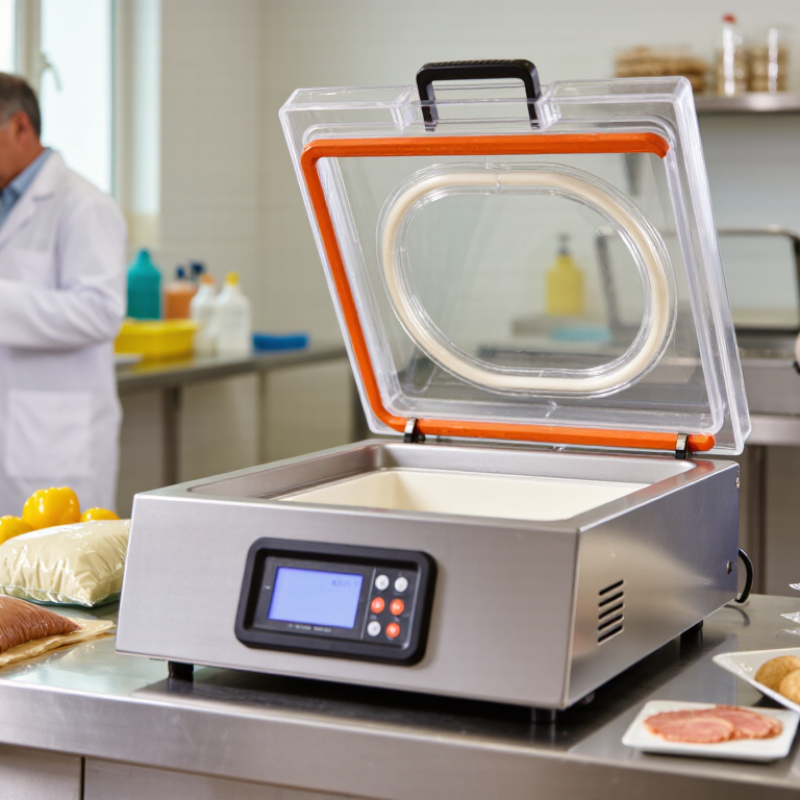
Select tabletop, floor-standing, single-chamber, or double-chamber construction according to workload. |
Tabletop units are generally suited to low or intermittent volumes; floor-standing and double-chamber designs are generally better suited to repeated production cycles.
|
Dimensional drawing, chamber dimensions, cycle demonstration, and rated duty information. |
Higher initial cost may be justified when labor savings and increased throughput reduce cost per packed unit. |
| Vacuum Performance |
Compare final vacuum level and actual cycle performance rather than pump nameplate size alone. |
Many commercial chamber machines specify an ultimate vacuum in the approximate range of 0.5–2.0 mbar, depending on pump, controls, load, sealing material, and test method.
|
Factory test method, calibrated vacuum gauge, product-load test, and cycle-time record. |
Insufficient vacuum can increase oxygen exposure and spoilage risk; excessive vacuum may damage delicate products. |
| Pump Capacity |
Match pump displacement and duty cycle to chamber volume and required throughput. |
Compact units commonly use pumps around 4–12 m³/h; larger production machines may use approximately 16–63 m³/h or more. These are planning ranges, not universal ratings.
|
Pump datasheet, motor rating, oil specification, and measured evacuation time with the intended load. |
Larger pumps may shorten cycles but can increase purchase price, energy use, oil consumption, and service requirements. |
| Chamber Size |
Allow enough clearance for the product, bag, lid movement, and sealing-bar layout. |
Common internal chamber dimensions range from approximately 300 × 300 × 100 mm for compact units to more than 800 × 700 × 200 mm for large production equipment.
|
Certified or approved dimensional drawing; test using the largest intended package. |
An undersized chamber creates labor and throughput losses; an oversized chamber increases footprint, energy demand, and capital cost. |
| Sealing System |
Check sealing length, seal width, bar arrangement, temperature control, and replaceable wear parts. |
Typical seal widths are 300–1,000 mm or more; common seal widths are approximately 2.5–5 mm. Double seals may improve package integrity where required.
|
Seal-bar drawing, seal-strength test, temperature-control method, and spare-part list. |
Seal-wire, PTFE tape, heating elements, and replacement bars are recurring maintenance costs. |
| Material Compatibility |
Specify materials that suit food contact, cleaning chemicals, humidity, temperature, and the intended industry. |
Stainless steel construction is commonly selected for hygienic or humid environments. Verify the exact grade and surface finish rather than assuming all stainless steel is equivalent.
|
Material declaration, surface-finish specification, weld-finish details, and cleaning instructions. |
Suitable materials reduce corrosion, sanitation problems, and premature replacement. |
| CE Compliance |
For the European Economic Area and other markets accepting CE marking, confirm conformity with all applicable legislation. |
CE marking is generally supported by the manufacturer's EU Declaration of Conformity and technical documentation. Depending on the machine, relevant legislation may include machinery, electrical safety, electromagnetic compatibility, and restriction-of-hazardous-substance requirements.
|
EU Declaration of Conformity, risk assessment, technical file summary, user manual, and CE marking on the machine. |
Missing or incomplete documentation can cause customs delays, corrective action, or requalification costs. |
| UL / NRTL Requirements |
Confirm whether the buyer, insurer, authority having jurisdiction, or installation site requires a U.S. or Canadian recognized certification. |
A UL Listed or equivalent Nationally Recognized Testing Laboratory certification is different from CE marking. Requirements depend on the machine design, jurisdiction, workplace, and purchaser.
|
Valid certification file, listing number where applicable, approved component information, and evaluation scope. |
Certification may add testing and engineering cost but can reduce installation delays and site-approval risk. |
| IP Rating |
Specify the enclosure protection needed for dust, water, washdown, and cleaning conditions. |
IP54 means limited dust ingress protection and protection against water splashes; IP65 means dust-tight protection and protection against water jets. An IP rating does not automatically certify hygienic design or resistance to every chemical.
|
IP test report to IEC 60529 or the applicable national adoption, plus confirmation of which enclosure was tested. |
A higher rating may increase purchase cost but reduce water, dust, and control-system failures in demanding environments. |
| Voltage and Frequency |
Specify rated voltage, phase, frequency, plug, protective earth, and allowable tolerance before ordering. |
Common supply groups include 100–120 V at 50/60 Hz, 200–240 V at 50 Hz, and 220–240 V at 50 Hz. Some machines support a voltage range; others require a dedicated configuration.
|
Nameplate photograph, wiring diagram, electrical datasheet, plug specification, and local electrician review. |
Incorrect voltage can cause unsafe operation, warranty disputes, transformer costs, or motor and control damage. |
| Electrical Safety |
Check protective earth, overcurrent protection, emergency stop, interlocks, leakage-current requirements, and cable routing. |
Chamber lids should prevent or control operation under unsafe conditions according to the applicable machine-safety design. Final installation must follow local electrical rules.
|
Electrical schematic, safety-circuit description, test records, and installation instructions. |
Good safety design lowers accident exposure, downtime, and compliance-related rework. |
| Energy Consumption |
Estimate electricity use from actual cycle time, motor load, heater duty, and daily operating hours. |
Compact machines may be rated around 0.8–2.0 kW; larger chamber machines may be approximately 2.0–7.5 kW or higher. Rated input is not the same as average energy consumed per cycle.
|
Rated power plate, measured kWh per cycle, duty-cycle assumptions, and local electricity tariff. |
Annual energy cost = kWh per cycle × cycles per day × operating days per year × electricity price. |
| Consumables |
Calculate bag cost, film cost, labels, ink, and any protective inserts required for each package. |
Chamber machines generally use pre-made vacuum bags or compatible pouch materials. Actual consumption depends on bag dimensions, material thickness, seal allowance, and rejection rate.
|
Approved packaging specification, supplier quotation, yield test, and scrap percentage. |
Packaging often represents a larger variable cost than electricity; reducing bag waste can materially lower cost per unit. |
| Oil and Pump Maintenance |
Identify oil type, oil capacity, change interval, filtration, and service access. |
Oil-lubricated vacuum pumps require suitable vacuum-pump oil and periodic inspection or replacement. Moisture-heavy applications may require more frequent oil care.
|
Manufacturer maintenance schedule, oil specification, service log, and spare-parts quotation. |
Neglected oil maintenance can reduce vacuum performance, increase cycle time, and shorten pump life. |
| Reliability and Service |
Evaluate expected duty cycle, spare-parts availability, response time, training, and local technical support. |
Critical wear parts commonly include seal wire or heating elements, PTFE tape, lid gasket, filters, oil, sensors, and pump components.
|
Recommended spare-parts kit, service-level agreement, maintenance training, and parts lead-time commitment. |
Downtime cost can exceed the purchase-price difference between otherwise similar machines. |
| Noise and Workplace Conditions |
Check noise, heat, ventilation, access space, drainage, and operator ergonomics. |
Noise must be verified from the actual machine because pump type, enclosure, installation, and cycle conditions affect the result. Request a measured sound-pressure value and test method.
|
Sound test data, installation layout, operator trial, and workplace risk assessment. |
Lower noise and better ergonomics can reduce fatigue, complaints, and productivity losses. |
| Validation and Acceptance |
Use a documented factory acceptance test and site acceptance test with the buyer's actual product and packaging. |
Test vacuum level, cycle time, seal strength, leak rate, package appearance, liquid handling, repeatability, and safety functions.
|
Signed acceptance protocol, sample records, photographs, calibration certificates, and corrective-action list. |
Early validation prevents expensive modifications after shipment and reduces ramp-up time. |
| Total Cost of Ownership |
Compare total ownership cost instead of purchase price alone. |
TCO = purchase price + freight and import costs + installation + energy + packaging + labor + maintenance + downtime + disposal or replacement costs.
|
Five-year cost model using supplier quotations, local tariffs, labor rates, planned throughput, and conservative downtime assumptions. |
Use cost per accepted package and payback period, not only machine price, to compare alternatives. |
| Global Documentation Pack |
Request a complete document package before issuing the purchase order. |
The pack should normally include a commercial invoice, packing list, user manual, parts list, electrical drawings, declaration or certification documents, test records, maintenance schedule, and warranty terms.
|
Document checklist signed by the supplier and reviewed by the buyer's compliance and engineering teams. |
Complete documentation lowers customs, installation, training, audit, and future service costs. |