
Who Are the Top Vacuum Packer Manufacturers in China?

Choosing a vacuum packer manufacturer is not just a matter of comparing prices. A machine may look impressive in a showroom, yet its seals can weaken under a full production shift. Buyers need to examine real operating details: chamber size, pump capacity, seal consistency, cleaning access, and available technical support. Small details matter.

Quality-management expert W. Edwards Deming is widely associated with the principle, “Quality is everyone’s responsibility.” Though he was not a vacuum packer specialist, the idea fits this market: dependable packaging depends on thoughtful design, careful manufacturing, and responsive after-sales service. A polished brochure alone proves little. Ask for test results, service terms, and a demonstration using packaging materials similar to your own.

This guide looks at leading vacuum packer manufacturers in China and the factors that help distinguish them. It considers product range, customization, manufacturing capability, export experience, and communication with buyers. Company claims should still be checked against documents, machine trials, and customer references. No single supplier will suit every operation. A compact tabletop unit for a small food workshop has different demands from an industrial line sealing hundreds of packages per hour. The comparison aims to make those differences clearer, while recognizing an imperfect truth: public information does not always reveal how a machine performs after months of daily use.
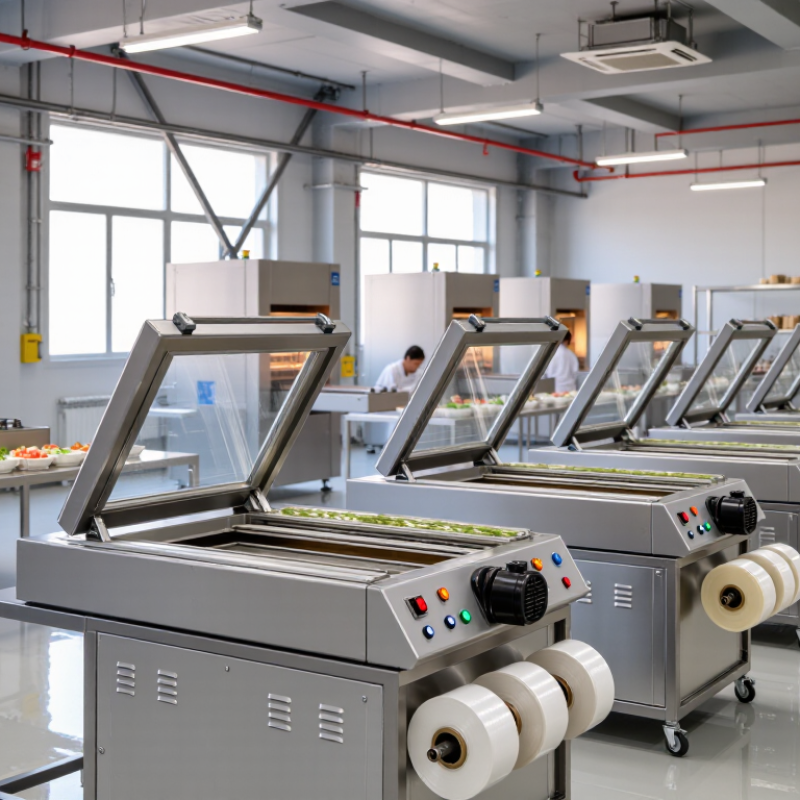
Who Are the Top Vacuum Packer Manufacturers in China?

How China’s Vacuum Packer Manufacturing Industry Is Organized

China’s vacuum packer industry is organized less like a single factory sector and more like a connected supply chain. The China Packaging Federation’s 2023 industry report recorded 1.1539 trillion yuan in revenue for packaging enterprises above designated size. This figure covers packaging broadly, not vacuum packers alone. Public industrial statistics also place packaging equipment within wider machinery categories, so they do not provide a simple count of vacuum packer manufacturers. That matters.

At the production level, some firms build complete machines, while others supply pumps, sealing bars, control systems, sensors, and stainless-steel frames. Regional workshops often focus on specific components or standard tabletop models. Larger engineering teams tend to assemble conveyor-fed lines for food processors and central kitchens, then configure sealing width, chamber depth, and line speed for each site. A buyer can see the difference on the factory floor: a compact unit may need one operator, while an integrated line requires coordinated feeding and maintenance. Not a neat ladder.

This structure supports flexible customization, but it can blur responsibility when a component fails. Manufacturers may source key parts externally, and documentation quality varies. Buyers should check test records, spare-part availability, and whether the stated throughput was measured with their product and packaging material. Claims need context.

Who Are the Top Vacuum Packer Manufacturers in China? - How China’s Vacuum Packer Manufacturing Industry Is Organized

Industry Segment Typical Products Role in the Supply Chain Common Technical Focus Typical Customer Markets
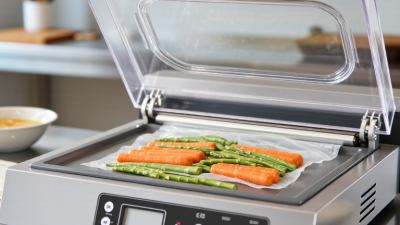
Chamber-machine manufacturers Tabletop, single-chamber, and double-chamber vacuum packers Build complete machines for small businesses, food processors, and commercial kitchens. Vacuum performance, sealing quality, chamber size, cycle time, and ease of cleaning Food service, meat and seafood processing, retail, and general product packaging
Industrial chamber-system manufacturers Large-chamber and multi-chamber machines, often configured for production lines Supply higher-throughput equipment and integrate it with upstream or downstream production equipment. Throughput, automation, machine reliability, service access, and line integration Large food factories, contract packers, and industrial manufacturers
Nozzle-type machine manufacturers External-suction vacuum packers for bags that extend outside the machine Serve applications where packages are too large or unsuitable for a chamber machine. Nozzle design, suction control, bag compatibility, and sealing consistency Industrial parts, textiles, electronics, and selected food applications
Thermoforming and rollstock-system manufacturers Automated packaging lines that form packages from film, evacuate air, and seal them Provide integrated, high-volume packaging systems rather than standalone tabletop equipment. Film forming, vacuum control, sealing, cutting, changeover, and line speed Meat, cheese, prepared foods, and other large-scale packaged products
Component and subsystem suppliers Vacuum pumps, sealing bars, control systems, sensors, valves, and electrical components Supply parts used by machine builders and support maintenance and replacement needs. Component compatibility, durability, availability, and serviceability Equipment manufacturers, distributors, service firms, and end users
Contract manufacturers and OEM suppliers Machines or subassemblies produced to a buyer’s specifications Manufacture equipment for domestic or overseas sellers that manage product design, sales, or distribution. Production consistency, customization, documentation, and export requirements Equipment distributors, importers, and private-label sellers
Packaging-material suppliers Vacuum pouches, barrier films, and rollstock used with compatible machines Provide packaging materials; film structure and dimensions must match the product and machine. Barrier properties, sealability, film thickness, and food-contact suitability where applicable Food processors, manufacturers, and packaging distributors
Integrators and service providers Installation, line integration, commissioning, maintenance, and spare-parts support Connect equipment to customer operations and help maintain performance after installation. Application assessment, operator training, troubleshooting, and parts availability Factories, food businesses, distributors, and equipment owners

What Makes a Vacuum Packer Manufacturer a Market Leader

A market leader is more than a factory with a large catalogue. It builds machines that hold vacuum levels consistently across repeated production runs. MarketsandMarkets’ 2023 report, Vacuum Packaging Market: Global Forecast to 2028, estimated the market at US$29.4 billion in 2023, with growth to US$37.4 billion by 2028. That expansion raises expectations for dependable equipment. Scale alone is not leadership. Buyers should check chamber uniformity, seal strength, cycle time, and access to replacement parts. A clean weld matters; so does the service technician who can explain why it failed.

For Chinese manufacturers, practical proof matters more than polished specifications. Ask for test records using your film, product shape, and target cycle rate. Inspect the sealing bar, vacuum pump, and control panel; these details show how easy the machine will be to maintain. Uptime matters. A supplier should document acceptance tests, operator training, and response times for service requests. ISO 9001 certification can support confidence in quality processes, but it does not guarantee every machine performs well. Even capable factories can overlook small usability problems, such as awkward cleaning access. That is worth questioning. Compare measured performance and after-sales support, not just purchase price.

Leading Vacuum Packer Manufacturers in China and Their Specialties

China’s leading vacuum packer manufacturers often specialize in different production needs, rather than offering one machine for every factory. Some build heavy-duty chamber machines for meat and seafood processors. These models typically use stainless-steel surfaces, adjustable sealing temperatures, and wide chambers for trays or bulky cuts. Operators should check seal consistency with the actual bag material, not just the machine’s rated speed.

Fast cycles matter. Other manufacturers focus on compact tabletop or single-chamber packers for small food businesses. Their machines may suit coffee, cheese, or prepared portions, where counter space is limited and daily volumes are moderate. Look for clear controls, accessible sealing bars, and readily available wear parts. A low purchase price can be misleading if replacement components take weeks to arrive.

For larger plants, some manufacturers specialize in double-chamber or conveyor-fed systems that reduce loading interruptions. Ask for production tests using your product size and packaging film, and inspect the finished seals for wrinkles or trapped liquid. Catalog figures can help, but they rarely capture every factory’s working conditions. I would not choose by advertised capacity alone; real output depends on staff, loading rhythm, and maintenance habits.

How Chinese Manufacturers Differ in Technology and Production Capacity

Chinese vacuum packer manufacturers differ less by location than by engineering depth and production discipline. Some focus on standard chamber machines, while others build custom systems for different package sizes and line speeds. Look closely at the sealing bar, vacuum pump configuration, and control interface. These parts affect cycle consistency, maintenance, and seal quality. A polished touchscreen is useful, but it cannot compensate for uneven sealing pressure. Small details matter.

Technology claims need practical checks. Ask how the machine handles repeated cycles, film changes, and routine cleaning. Request sample runs using packaging similar to your own, then inspect seal width and package integrity. The comparison is rarely tidy. Production capacity varies too: a workshop may assemble flexible, low-volume orders, while a larger factory may have dedicated machining, testing, and assembly stations. Bigger output does not automatically mean better quality. Review inspection records, spare-parts availability, and lead times for replacement components. If possible, observe a production run and speak with the technical team. A missed detail here can become downtime later. Manufacturers may also describe capacity differently, so clarify whether figures refer to finished machines, assembly slots, or total plant output.

How to Evaluate Manufacturers for Quality, Compliance, and Service

Who Are the Top Vacuum Packer Manufacturers in China?

Choosing a manufacturer takes more than comparing prices or polished product photos. Look for consistent build quality: inspect welds, lid alignment, seals, and the chamber’s finish. Ask how each unit is tested before shipment, and request sample inspection records. A machine should produce repeatable seals across several cycles, not just one impressive demonstration. Small details matter.

Compliance deserves close attention. Ask for current test reports and certificates relevant to your destination market, then verify that the documents match the exact model being quoted. Check whether electrical components, safety guards, and manuals are included in the evaluation. A document alone is not enough. I would not treat a factory visit or a single successful test as proof of long-term reliability; that judgment needs follow-up. Service is equally practical: confirm spare-parts availability, response times, warranty terms, and whether technicians can troubleshoot remotely. Ask how quickly they can provide a replacement sealing strip or explain an error code.

Tips: Send the same product samples and operating requirements to each supplier. Compare seal consistency, cycle time, and written service commitments. Keep the questions specific; vague answers are hard to assess.

Who Are the Top Vacuum Packer Manufacturers in China?

How to Evaluate Manufacturers for Quality, Compliance, and Service

The bars show the publication years of selected standards relevant to quality management, food safety management, machinery risk assessment, and electrical equipment. They are reference points—not proof that any manufacturer is certified or compliant. Verify certificate validity and scope, machine-specific documentation, and applicable market requirements. For service, check response times, spare-parts availability, and after-sales support.

You've just added this product to the cart:

0
    0
    Your Cart
    Your cart is empty