Top China Industrial Vacuum Sealer Manufacturers?
Choosing among the top China industrial vacuum sealer manufacturers requires more than comparing prices and polished product photos. Buyers should examine sealing performance, pump capacity, chamber construction, control accuracy, service response, and documented quality procedures. A machine may look impressive in a catalogue, yet fail when sealing oily meat, sharp-edged parts, or hundreds of bags per hour.
Packaging expert Walter Soroka describes packaging as “the science, art, and technology of enclosing and protecting products for distribution, storage, sale, and use.” This principle fits every industrial vacuum sealer evaluation. The equipment must protect the product while supporting real production conditions. Stainless-steel chambers, reliable sealing wires, adjustable vacuum levels, and easy-clean surfaces can make a visible difference on the factory floor. Operators notice these details quickly.
China has many capable manufacturers, but capability is not uniform. Some specialize in compact chamber machines. Others build double-chamber systems, belt-fed sealers, or customized lines for food, electronics, and medical packaging. The difficult part is separating proven experience from attractive claims. Ask for test videos, sealing samples, electrical specifications, spare-parts policies, and references from comparable users. Small evidence matters.
A reasonable shortlist should also consider training and after-sales support. A low purchase price may become expensive when troubleshooting is slow. This is where my own judgment needs caution: published specifications rarely reveal long-term reliability. Factory audits, sample testing, and direct technical conversations remain essential. The best manufacturers are not always the loudest online. They are the ones whose machines keep producing consistent seals after the showroom excitement disappears.
China’s Industrial Vacuum Sealer Landscape: Types, Capacity, and Applications
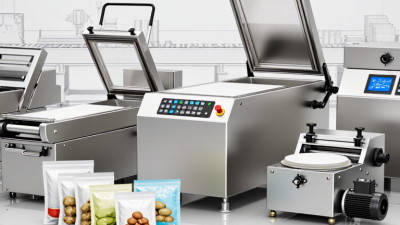
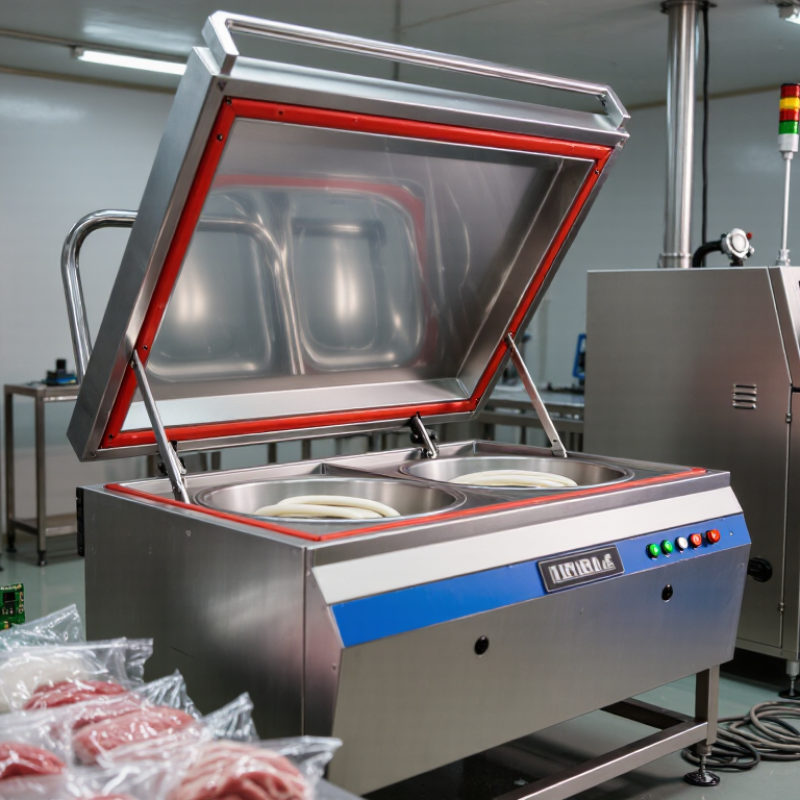
China’s industrial vacuum sealer landscape covers several machine types and production levels. Manufacturers generally offer external suction, chamber, continuous, and double-chamber sealers. External suction models suit small workshops and flexible bags. Chamber machines create stronger vacuum control for liquids, powders, and dense products. Continuous sealers support faster pouch handling on production lines. Double-chamber designs reduce loading delays. Each type has a different maintenance burden.
Capacity is not measured by pump power alone. Small machines may process occasional batches of 3 to 8 bags per cycle. Medium systems often handle several hundred packs per hour. Large automatic lines can connect with fillers, conveyors, and weighing equipment. Actual output depends on bag size, product shape, sealing time, and operator skill. Ask for tested production data, not brochure estimates. Seal width matters.
Applications range from meat, seafood, cheese, and prepared foods to hardware, textiles, and clean industrial components. Food processors usually need stainless steel construction, removable sealing bars, and easy cleaning access. Frozen products require stable sealing temperatures and reliable moisture control. Industrial users may prioritize oversized chambers and programmable vacuum cycles. In factory evaluations, I check weld consistency, oil condition, sensor accuracy, and spare-part access. One weakness is often overlooked: a powerful pump cannot fix poor loading habits. Real performance varies. A short trial with the buyer’s own products can reveal wrinkles, trapped air, or weak seals before installation.
China’s Industrial Vacuum Sealer Landscape: Types, Capacity, and Applications
Typical throughput varies by machine format, product size, bag dimensions, and sealing cycle. Chamber machines are commonly used for batch packing, while belt and thermoforming systems support higher-volume production lines.
Data shown are representative operating values based on commonly published specifications for industrial equipment categories. Actual performance depends on product characteristics, packaging materials, vacuum level, sealing time, and automation configuration.
Key Performance Metrics: 99.9% Vacuum Levels and 5–1200 mm Seal Widths
Top China Industrial Vacuum Sealer Manufacturers?
Industrial vacuum sealer selection should start with measurable performance, not catalog claims. A 99.9% vacuum level sounds impressive, yet suppliers must state the testing basis. It may describe air removal, not final absolute pressure. Numbers need context. A calibrated vacuum sensor, leak-rate test, and repeatability record provide stronger evidence. Grand View Research estimated the global vacuum packaging market at about USD 29.64 billion in 2023, with projected growth near 5.8% annually through 2030. This expansion increases pressure on manufacturers to prove performance under real production conditions.
Seal dimensions also require careful review. A stated range of 5–1200 mm may describe compatible package sizes or sealing-bar length, rather than the actual seal-band width. Buyers should request drawings, sample tests, and seal-strength results for their film structure. For narrow pouches, alignment matters. For wide bags, heat balance matters more. PMMI industry reports continue to identify automation, labor efficiency, and equipment reliability as major packaging priorities. A dependable machine should record cycle time, temperature stability, vacuum pressure, and rejected seals.
Experience shows that high vacuum alone cannot rescue weak sealing material or poor loading. It can even deform delicate products. This is where specifications become imperfect. Ask for production data, not only laboratory results. Check whether the machine maintains 99.9% performance after thousands of cycles, during film changes, and under dust or oil exposure. The best evaluation combines pressure readings, seal integrity, maintenance access, and operator feedback.
How to Evaluate China Manufacturers by Throughput, Materials, and Controls
Evaluating China’s industrial vacuum sealer manufacturers requires more than comparing quoted prices. Throughput must be verified under production conditions. The MarketsandMarkets Vacuum Packaging Market report projects a 4.8% compound annual growth rate from 2023 to 2028. That growth increases pressure on factories to promise faster cycles. Ask for tested cycles per minute, bag dimensions, product temperature, and seal failure rates. A live trial with your own packaging film is more useful than a catalogue figure.
Materials reveal whether the machine suits harsh daily work. Inspect stainless-steel grades, weld quality, chamber thickness, sealing-wire insulation, and gasket replacement time. Food-contact applications usually require documented material traceability and hygienic design. Request certificates, inspection records, and sample parts. The Packaging Machinery Manufacturers Institute reports that labor availability and automation remain major packaging investment drivers in its recent industry surveys. Therefore, evaluate conveyors, sensors, and changeover time, not only the pump size.
Controls decide whether promised throughput survives real shifts. Look for recipe storage, password levels, alarm history, temperature feedback, vacuum sensors, and remote diagnostics. Data should export clearly for maintenance review. ISO 13849-1 safety documentation is worth requesting, even when the machine appears simple. I would distrust one factory video. It proves little. Require a recorded acceptance test, repeated across several cycles, with vacuum level, seal temperature, and cycle time logged. Market estimates vary, and supplier test conditions can be unusually favorable; that is where careful buyers often miss the weakness.
Compliance Checklist: HACCP, GMP, CE, and ISO 9001 Certification
When evaluating China industrial vacuum sealer manufacturers, compliance should guide the shortlist, not price alone. Ask for a current HACCP plan covering product-contact surfaces, cleaning routines, seal temperature, and contamination risks. A credible supplier should explain each control point clearly. Factory visits reveal useful details, such as labeled tools, sealed electrical cabinets, and orderly spare-parts storage.
GMP practices should appear on the production floor, not only in a brochure. Check material identification, operator training, maintenance records, and batch traceability.
For machines sold in applicable European markets, request the CE Declaration of Conformity, risk assessment, technical file index, and relevant test reports. CE marking is not a universal quality certificate. It confirms conformity with applicable requirements.
ISO 9001 certification can strengthen confidence in purchasing controls, corrective actions, and document management. Verify the certificate’s scope, issuing body, and validity date. During factory discussions, ask for seal-strength test records and sample inspection reports.
In my experience, practical evidence is more valuable than polished promises. A supplier may pass an audit yet still show weak change control. That deserves attention.
Also check whether manuals include wiring diagrams, emergency-stop instructions, cleaning guidance, and replacement-part specifications. I would record every answer, because memory becomes unreliable after several factory meetings.